
If you are currently wrestling with the dilemma of whether or not to buy ETH, you have run into the exact same core questions that almost all cryptocurrency newcomers face:
Bitcoin is already too expensive—does Ethereum offer a better opportunity?
Ethereum is the second-largest digital asset by market capitalization, yet it is rarely called "digital gold" like Bitcoin. Instead, it is surrounded by a dense web of complex concepts: smart contracts, DeFi, NFTs, stablecoins, Layer 2 networks, staking yields, institutional ETFs, and Real-World Assets (RWAs). This complexity often makes its price action difficult to interpret.
Moving through 2026, Ethereum's market dynamics have grown increasingly nuanced:
- Institutional spot ETFs have cemented themselves as a primary onboarding channel.
- Staking rewards have structurally transformed ETH into a yield-bearing digital asset.
- Exchange ETH reserves have systematically declined as long-term holding and staking ratios expand.
- The Layer 2 ecosystem continues to scale and absorb transaction volume.
- Competitive networks like Solana, BNB Chain, Sui, and Base are actively challenging Ethereum's dominance.
- The ETH/BTC price ratio has fluctuated near multi-year local lows.
Following a significant retracement from its historical peaks, many investors find themselves uncertain whether the current price range represents a foundational accumulation zone or a structural value trap.
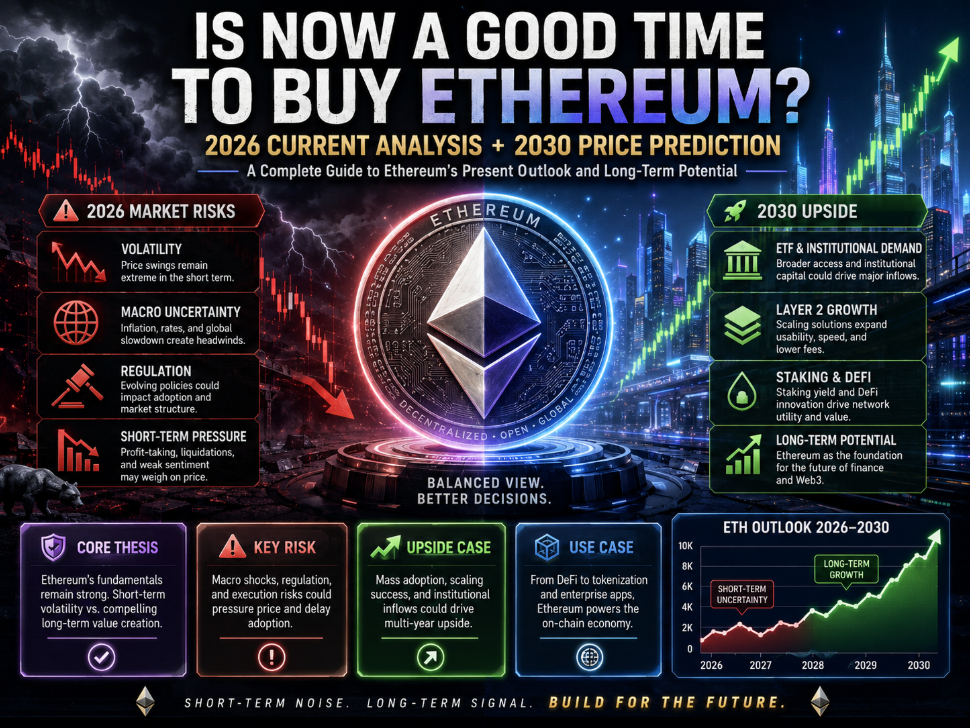
This guide will systematically address these core concerns, breaking down what Ethereum actually is, how it contrasts fundamentally with Bitcoin, its 2026 status quo, actionable allocation strategies, realistic 2030 price targets, and how to execute your purchases safely on HiBT.
Before officially beginning, a quick disclaimer: All insights, on-chain analyses, institutional forecasting data, and market cycle breakdowns in this text are for research and educational purposes only. They do not constitute financial or investment advice. Digital assets maintain extreme price volatility; despite its status as a blue-chip asset, ETH remains subject to severe drawdowns. Any purchase should be executed under the premise that you can comfortably absorb capital losses.
I. What Exactly is Ether? How Does It Differ Fundamentally from Bitcoin?
Newcomers frequently conflate the terms "Ethereum" and "Ether." They represent two distinct components of the ecosystem:
- Ethereum refers to the global, decentralized blockchain network infrastructure.
- Ether (ticker symbol: ETH) is the native cryptocurrency asset that powers that specific network architecture.
To use a clear software analogy: Think of Ethereum as a massive, globally distributed, open-source decentralized operating system, while ETH serves as the underlying fuel, network gas fee token, staking mechanism, and primary programmatic store of value within that system.
When you purchase ETH, you are not buying shares in an "Ethereum corporation"—because Ethereum is not a company. You are accumulating the native utility asset powering an open-source global infrastructure.
1. The relationship between the Ethereum network and the ETH token
Ethereum is a base-layer blockchain, but it was designed to do far more than process simple peer-to-peer transfers.
- Bitcoin was engineered to solve a specific monetary challenge: How to securely transfer scarcity and value globally without relying on a central banking intermediary.
- Ethereum was engineered to solve a broader computational challenge: How to deploy and execute self-sustaining code and applications globally without relying on a centralized corporate server infrastructure.
Because the network acts as an open infrastructure layer, developers utilize it to build decentralized exchanges (DEXs), non-custodial lending desks, stablecoin settlement networks, digital ticketing structures, Real-World Asset tokenization vehicles, decentralized identity systems, and high-performance Layer 2 scaling layers.
Within this framework, the ETH token assumes multiple roles:
- The required gas fee asset to process any network transaction.
- The foundational capital required to participate in consensus staking.
- The primary collateral underpinning decentralized financial (DeFi) loans.
- The underlying security anchor for Layer 2 rollups.
- The base asset driving institutional spot ETFs.
2. What are smart contracts? Why is Ethereum dubbed the "operating system of blockchain"?
A smart contract is an automated, self-executing program that runs directly on top of the blockchain ledger. Traditional financial agreements require human intermediaries—bank compliance officers, legal counsels, centralized escrow platforms, and clearinghouses—to enforce terms. Smart contracts replace intermediaries with immutable code logic.
For example, when using a decentralized lending protocol to borrow stablecoins against your ETH, the transaction bypasses bank loan officers entirely. The process is governed automatically by pre-set smart contract code:
- You deposit your ETH into the protocol's secure escrow contract.
- The code calculates your exact collateralization ratio based on live oracle prices.
- The contract automatically mints or releases the corresponding stablecoins to your wallet.
- If your collateral value drops below a hardcoded safety threshold, the contract automatically triggers an auction to liquidate the ETH and safeguard the pool's debt.
- Every single parameter is transparent, public, and auditable on-chain by any network participant.
This highlights the fundamental difference between the two leading crypto assets: Bitcoin is built as an ultra-secure, highly scarce value-preservation architecture—"digital gold." Ethereum functions as an open, programmable, multi-asset deployment engine—a decentralized world computer.
3. Demystifying Ethereum's Gas fees
Gas refers to the fee required to execute any computational operation on the Ethereum blockchain. It represents the pricing mechanism for consuming the network's processing resources.
Every interaction on the network requires a gas payment settled in fractional ETH:
- Executing standard ETH or stablecoin transfers.
- Executing token swaps on a decentralized exchange.
- Minting or transferring an NFT.
- Supplying capital to a DeFi protocol.
- Deploying a smart contract onto the mainnet.
- Bridging digital assets over to a Layer 2 scaling network.
While Bitcoin transaction fees are priced strictly based on the data size of a transfer in bytes, Ethereum's gas fee structure accounts for computational complexity. Because the network is running code logic rather than simply updating account balances, intricate multi-step smart contract interactions consume more gas.
This explains why Ethereum faced heavy criticism for high costs during historical usage spikes. When on-chain demand surges, users actively outbid one another to have their transactions prioritized by validator nodes, driving gas prices up significantly. A series of major network upgrades—such as EIP-1559, the Dencun hard fork, and Pectra—were specifically engineered to optimize fee predictability, scale transaction throughput, and lower overall execution costs.
4. The historical evolution of Ethereum (2015–2026)
The Ethereum protocol undergoes continuous technical iteration. Since its initial deployment, the network has moved through several milestone upgrades:
- 2015 (Mainnet Launch): The Genesis block is initialized, establishing ETH as a native protocol asset. The network begins under a Proof-of-Work (PoW) consensus model, requiring industrial mining hardware to secure blocks, identical to Bitcoin.
- 2016 (The DAO Fork): Following a major exploit of an early decentralized venture fund, the community executes a controversial hard fork to recover stolen capital, splitting the ledger into today's Ethereum (ETH) and Ethereum Classic (ETC).
- 2017 (The ICO Boom): The network establishes itself as the premier global token-launch platform via the ERC-20 token standard, driving intense demand for ETH as the primary capital asset used to fund early Web3 startups.
- 2020 (DeFi Summer): Non-custodial financial protocols like Uniswap, Aave, and MakerDAO experience exponential capital growth, transforming Ethereum into the core settlement layer for decentralized finance.
- 2021 (The NFT Expansion): Digital art, gaming assets, and cultural collectibles drive mainnet transaction density to historic highs, resulting in severe network congestion and elevated gas fees.
- 2022 (The Merge): Ethereum completes its most complex technical upgrade, swapping its underlying consensus engine from Proof-of-Work to Proof-of-Stake (PoS). This shift eliminated industrial mining and replaced it with capital-efficient validator staking to secure the network.
- 2023–2024 (The Layer 2 & ETF Era): Scalability networks like Arbitrum, Optimism, and Base successfully absorb high-frequency retail transactions, while institutional spot ETH ETFs clear global regulatory hurdles, bringing the asset into traditional asset management portfolios.
- 2025 (The Pectra Upgrade): This upgrade introduces major account abstraction refinements, enhances wallet user experiences, optimizes validator node flexibility, and increases overall network execution efficiency.
- 2026 (Glamsterdam, Hegotá, and Institutional Re-Rating): The network enters a mature structural phase. Market pricing models begin to move past treating ETH purely as a volatile, speculative technology asset. Instead, valuation frameworks price it as a multi-dimensional yield-bearing digital infrastructure asset.
5. How Ethereum stacks up against Solana and BNB Chain
Ethereum remains the dominant smart contract settlement layer, but it navigates an increasingly competitive landscape.
Ethereum's Core Moats:
- The deepest capital liquidity and institutional asset concentration in Web3.
- The premier settlement layer for global stablecoins and regulated RWAs.
- An exceptionally dense, mature developer ecosystem.
- A diverse network of Layer 2 scaling layers.
- Regulated spot ETF investment structures.
- High structural decentralization and cryptographic network security profiles.
Solana's Competitive Moat: Optimizes for a monolithic, high-throughput architecture that delivers sub-second transaction execution, low transaction costs, and a smooth user experience. This setup makes it highly effective for high-frequency retail applications, consumer payment rails, meme coin trading, and decentralized physical infrastructure networks (DePIN).
BNB Chain's Competitive Moat: Capitalizes on its deep alignment with major bursa ecosystems, offering affordable transaction structures, high throughput, and an accessible onboarding route for users in emerging markets.
Base's Competitive Moat: Developed as an Ethereum Layer 2 network backed by Coinbase, Base links directly to institutional liquidity channels and compliant consumer funnels, making it a powerful onboarding rail for retail crypto applications.
Ethereum's primary valuation defense does not rely on being the fastest or cheapest standalone chain; it acts as the secure, high-value financial settlement foundation for global digital assets.
II. The 2026 Status Quo: What Are Institutional Allocators Executing Behind the Scenes?
While retail market participants often track daily candlestick charts, institutional allocators evaluate on-chain supply dynamics and structural plumbing. In 2026, Ethereum's market structure is undergoing a steady transformation, shifting from a speculative technology asset into a yield-bearing digital infrastructure asset.
1. The structural shift driven by Spot Staking ETFs
The introduction of spot ETH ETFs in traditional financial markets marked a major regulatory milestone. They allowed legacy wealth networks to secure exposure to ETH directly through standard brokerage accounts, bypassing the complexities of managing private key infrastructure and non-custodial wallets.
By 2026, the rollout of Staking-Enabled ETH ETFs further refined this institutional investment thesis. While early versions tracked only the spot price of the asset, staking-enabled ETFs actively allocate their underlying ETH reserves to Ethereum's consensus validation network to capture native staking yields.
This yields-bearing capability allows traditional asset managers to model ETH within a framework comparable to traditional income-generating assets. However, staking-enabled structures carry unique operational trade-offs that allocators must carefully account for:
- Staked assets are subject to network unbonding queues, which can temporarily impact immediate exit liquidity during extreme market anomalies.
- Validator nodes face technical slashing risks if they experience severe operational faults.
- Base reward yields fluctuate dynamically based on the total aggregate volume of ETH participating in the staking network.
- Fund management fees directly impact net annualized yields for investors.
Despite these variables, the integration of native staking rewards into institutional fund vehicles has established a sustainable demand driver for the asset.
2. Evaluating the steady decline in exchange ETH reserves
Throughout 2026, on-chain analytics track a persistent structural trend: the aggregate volume of ETH held across centralized exchange reserves continues to sit at multi-year lows.
This contraction in exchange liquidity typically indicates a shift in investor behavior:
- Assets are migrating into cold storage for long-term preservation.
- Liquid capital is moving directly into mainnet consensus staking contracts or liquid staking protocols.
- Institutional assets are flowing into regulated, long-term institutional custody vaults.
- The immediate liquid supply available on spot order books is contracting.
While a reduction in exchange reserves does not trigger immediate upward price action, it alters the market's supply-side dynamics. If a period of thin exchange inventory coincides with a sudden spike in institutional demand, expanding stablecoin issuance, or positive ETF inflows, the reduced liquid supply can significantly amplify upward price movements.
3. The "Internet Bond" valuation framework
Historically, market participants priced ETH using valuation models designed for high-growth technology stocks, tracking metrics like active wallet growth, decentralized application deployments, transaction fee revenue, and user acquisition.
In 2026, the growth of consensus staking, institutional ETFs, and regulated RWA settlement layers has introduced an alternative asset comparison: the Internet Bond framework.
While ETH lacks a contractually guaranteed principal repayment structure or a fixed interest rate, and carries significantly higher price volatility than traditional sovereign debt, institutional research desks frequently evaluate its native staking yield as a digital, programmatic benchmark rate:
- A predictable, programmatic asset emission schedule.
- Capital yields generated directly by processing global on-chain transaction volume.
- Accessible institutional onboarding channels via spot ETFs.
- Growing settlement utility across stablecoins and tokenized assets.
This cash-flow-reflective model offers long-term holders a clear framework for evaluating value, shifting the asset's investment thesis from pure price speculation to structural yield generation.
4. The divergence between institutional inflows and the ETH/BTC ratio
One of the most notable market characteristics in 2026 is the clear divergence between steady institutional ETF adoption and a muted ETH/BTC price ratio, which indicates that Ethereum has underperformed Bitcoin on a relative basis.
This divergence is driven by several distinct market factors:
- Simplicity of the Bitcoin Narrative: Bitcoin’s positioning as a non-sovereign, mathematically scarce digital gold is straightforward for institutional committees to evaluate. Ethereum’s core value proposition—built around smart contracts, gas dynamics, Layer 2 value capture, and modular execution layers—presents a steeper educational barrier for traditional allocators.
- First-Mover Inflow Dynamics: When traditional capital opens allocations within the digital asset sector, initial capital flows tend to concentrate heavily inside Bitcoin before rotating down the risk curve.
- Application-Layer Attention Splitting: High-throughput networks have captured a significant share of retail application activity, causing some investors to question Ethereum's premium valuation if retail transactions migrate to alternative chains.
- Layer 2 Value Capture Complexity: The rapid growth of Layer 2 scaling networks has migrated high-frequency transaction fees away from the Ethereum mainnet. While this scales the overall ecosystem, it requires allocators to build more sophisticated valuation models to track how value flows back to base-layer token holders.
This relative underperformance does not mean institutional adoption has stalled; rather, it indicates that the market is actively repricing Ethereum's long-term growth model as it builds out its institutional infrastructure channels. If you are simultaneously evaluating entry windows for Bitcoin, you can review our companion piece on Is It a Good Time to Buy Bitcoin Now?.
5. Assessing competitive pressures from high-throughput networks
The competitive pressure from high-throughput networks on Ethereum's application layer is a permanent fixture of the contemporary market landscape, particularly across specific high-frequency sectors:
- Retail meme coin speculation and high-frequency trading.
- Consumer micro-payments and retail digital checkouts.
- High-density Decentralized Physical Infrastructure Networks (DePIN).
- High-volume Web3 gaming transactions.
Networks built around monolithic architectures optimize for immediate, low-cost user execution. However, Ethereum's primary value proposition does not rely on delivering the lowest costs for high-frequency retail transactions; its core moat is anchored in acting as a highly secure global financial settlement foundation.
The emerging digital asset landscape points toward a tiered structure of network specialization:
- Bitcoin: The primary non-sovereign digital value-preservation asset.
- Ethereum: The high-security settlement foundation for institutional finance, large-scale DeFi, and tokenized RWAs.
- Ethereum Layer 2 Networks: Accessible execution environments built to scale consumer applications while settling security back to the mainnet.
- High-Throughput Monolithic Chains: High-performance, specialized layers optimized for consumer interactions, high-frequency payments, and retail trading activity.
Ethereum's primary risk is not losing low-margin retail transaction volume; it is ensuring that its ecosystem remains the premier venue for settling high-value institutional capital, global stablecoins, and complex financial instruments.
III. Analyzing Historical Price Cycles: What Patterns Emerge?
Evaluating an allocation into ETH requires a clear understanding of its historical pricing cycles. The asset has historically experienced powerful speculative expansions followed by deep, multi-year market corrections, with each distinct wave driven by unique structural catalysts.
1. The structural drivers behind Ethereum's historical bull expansions
- The 2016–2017 Expansion (The Capital Raising Cycle): Driven by the emergence of the ERC-20 token standard, which turned Ethereum into a global capital-raising launchpad. Because investors required ETH to participate in early token offerings, demand velocity scaled dramatically, driving the asset from under ten dollars to its early peak above $1,400.
- The 2020 Expansion (The Decentralized Finance Cycle): Fueled by the structural launch of non-custodial lending desks, automated market makers, and liquidity farming protocols. ETH became the primary collateral asset underpinning decentralized financial applications, moving its utility from a simple funding asset to core financial capital.
- The 2021 Expansion (The On-Chain Application & Culture Cycle): Driven by the breakout growth of the NFT market and Web3 digital collectibles. High transaction densities caused network gas fees to spike, resulting in heavy token consumption and forcing the market to reprice the value of Ethereum's underlying network effects.
- Post-2022 Performance (The Proof-of-Stake Transition): The execution of The Merge eliminated industrial mining overhead and introduced programmatic token-burning mechanisms via EIP-1559, altering the asset's structural supply-and-demand dynamics heading into the institutional era.
2. Why did ETH experience a post-upgrade correction following The Merge?
A common misconception among retail market participants is that successful technical upgrades automatically translate into immediate upward price momentum. Following the completion of The Merge in 2022, ETH did not rally immediately; instead, it experienced an extended correction in line with broader bear market conditions.
This correction was driven by several clear market factors:
- Speculative Position Unwinding: Market participants aggressively priced in anticipation of the technical milestone months in advance, leading to a classic "sell the news" liquidation event once the upgrade successfully executed.
- Macro Tighter Financial Conditions: The implementation of The Merge coincided with aggressive global interest rate hikes, which reduced investor appetite across all risk asset classes.
- Systemic Credit Collapses: Unrelated platform failures across the crypto sector during that period damaged general market confidence, overshadowing the technical achievement of the transition to Proof-of-Stake.
- Valuation Model Readjustment: Traditional analysts required extended timelines to study, evaluate, and accurately price the asset's updated Proof-of-Stake economics, validator yield dynamics, and net emission adjustments.
Technical milestones can significantly strengthen an asset's long-term fundamentals, but short-term spot pricing remains heavily subject to macro liquidity conditions and broader market sentiment.
3. Capital rotation dynamics post-Bitcoin Halving
Historically, alternative digital assets follow a distinct capital rotation pathway dictated by Bitcoin's halving liquidity waves:
[Bitcoin Capital Accumulation] ➔ [Ethereum Inflow Transition] ➔ [Large-Cap Alternative Platforms] ➔ [Broad Altcoin Sector Allocation]
ETH rarely initiates an independent bull market expansion while Bitcoin is in the early stages of breaking out. Instead, it acts as a primary beneficiary when capital begins rotating down the risk curve from Bitcoin into established smart contract platforms. However, with both assets now maintaining regulated spot ETF channels in 2026, this historical rotation schedule has grown more nuanced, as institutional capital flows can distribute into both assets simultaneously rather than following a strict sequential path.
4. Managing volatility: Acknowledging historical 80%+ retracements
Investors must recognize that despite its status as an established, multi-billion-dollar digital asset, ETH has historically experienced severe cyclical drawdowns:
- During the 2018 market correction, the asset retraced over 90% from its cyclical high.
- During the 2022 bear market cycle, the asset declined over 80% from its previous peak, dropping from over $4,800 back into the triple-digit range.
These intense cyclical corrections highlight two core principles for investors: buying during periods of peak market euphoria can expose capital to multi-year recovery timelines, and managing overall position sizing and entry pacing is far more critical than attempting to perfectly timing market turns.
IV. 2026–2030 Price Forecasting: Navigating Multi-Scenario Models
Long-term price projections for ETH exhibit a wide variance across global banking research desks and institutional asset management firms. Conservative algorithmic models project the asset will remain bound within a tight $3,000 to $5,000 channel out to 2030, citing competitive fee pressures. Meanwhile, optimistic structural models suggest it could target the $8,000 to $15,000+ range if it cements its role as the premier global settlement layer for tokenized institutional finance.
The wide disparity between these forecasts stems directly from the core valuation methodologies applied by different analytical desks.
1. Evaluating Institutional Valuation Methodologies
- The Cash-Flow and Network Fee Model (e.g., VanEck Research): This framework treats Ethereum as a global financial infrastructure network, evaluating its valuation through programmatic cash-flow analytics. Analysts project future mainnet transaction fee retention, Layer 2 settlement revenues, programmatic token-burn velocities via EIP-1559, and maximum extractable value (MEV) capture to discount future token value back to present targets.
- The Macro Asset Allocation Model (e.g., Standard Chartered / Global Banking Desks): This methodology treats ETH primarily as a traditional asset allocation tool. Projections are built around assumptions of traditional capital pools (pension funds, wealth networks, family offices) allocating a fixed percentage of their portfolios to staking-enabled digital assets via regulated ETF channels, as well as the growth of the regulated stablecoin and tokenized debt markets settling on-chain.
- Consensus Panel Evaluations (e.g., Finder FinTech Surveys): These compile structural sentiment indicators by pooling perspectives from a diverse array of industry executives, academic researchers, and macro analysts, providing a broad view of general market expectations.
- Conservative Linear Growth Models: These tools bypass complex variables like protocol upgrades, staking adoption, and RWA integration, applying a fixed annual growth percentage to current prices. This conservative approach provides a baseline expectation, though it struggles to capture the non-linear volatility typical of digital asset markets.
2. Four Core Variables Shaping Ethereum's 2030 Value Horizon
- Variable 1: Value Accrual Mechanics from Layer 2 Scaling Networks. Layer 2 rollups are essential for handling high-frequency consumer transactions. The critical fundamental question is whether the migration of transaction volume to Layer 2 layers will consistently drive value back to base-layer ETH token holders via mainnet settlement fees, or if it will durably compress base-layer fee revenue.
- Variable 2: Aggregated On-Chain Stablecoin and RWA Settlement Volume. Stablecoins and tokenized sovereign debt represent clear examples of real-world utility on-chain. If the tokenization of traditional financial instruments scales extensively toward 2030, and chooses Ethereum as its primary secure settlement layer, the protocol’s structural moat will strengthen.
- Variable 3: Institutional Allocation Density via Staking ETFs. The long-term price floor of the asset is heavily influenced by the percentage of circulating supply that is structurally absorbed and locked inside regulated investment fund vehicles by long-term allocators.
- Variable 4: Global Macro Liquidity Environments. As a risk asset class, alternative digital infrastructure valuations remain highly dependent on global monetary policy, interest rate trends, and systemic capital liquidity windows.
3. Multi-Scenario Projections for ETH (2026–2030)
2026 Projections
- Bear Case (~$1,200): Global macro liquidity contracts significantly, spot ETF inflows stall, the ETH/BTC ratio continues to weaken, and alternative layer-1 chains capture the majority of new application narratives, driving capital risk-off.
- Base Case (~$2,500): The asset stabilizes as the technical refinements of the Pectra upgrade take effect, staking-enabled ETFs capture steady institutional allocations, and declining exchange inventory provides a firm valuation floor.
- Bull Case (~$5,500): Bitcoin's expansion triggers a broad altcoin rotation, institutional ETF inflows step up significantly, and expanding stablecoin issuance drives a retest of historical peaks.
2027 Projections
- Bear Case (~$1,500): Relative underperformance against Bitcoin persists, and ongoing debates around Layer 2 value accrual limit broader capital inflows.
- Base Case (~$3,300): Steady growth across staking deployment, stablecoin settlement, and Layer 2 adoption brings the asset into a healthy, mid-range fundamental valuation zone.
- Bull Case (~$7,000): A robust altcoin bull market takes hold, positioning ETH as the primary liquidity destination for rotating capital, driving prices past previous cyclical highs.
2028 Projections
- Bear Case (~$2,000): Post-halving market dynamics fail to trigger a broad risk-on altcoin expansion, keeping prices within a slow, range-bound recovery track.
- Base Case (~$5,000): Late-stage cyclical capital rotation aligns with steady protocol roadmap execution, lifting ETH back toward its historical all-time high range.
- Bull Case (~$9,500): Ethereum cements its position as the core settlement engine for institutional DeFi networks, while staking demands absorb a significant percentage of circulating supply.
2029 Projections
- Bear Case (~$2,500): The protocol retains its market-leader status but its growth pace lags behind optimistic projections, capped by competitive alternative architectures and tight macro environments.
- Base Case (~$6,500): The platform maintains its position as the premier smart contract settlement network, Layer 2 infrastructure matures, and tokenized RWA scale significantly, driving an institutional re-rating.
- Bull Case (~$12,000): Global macro liquidity expands, institutional allocations accelerate across wealth networks, and traditional financial assets migrate on-chain, positioning Ethereum as a core financial connection layer.
2030 Projections
- Bear Case (~$3,000): The asset retains a solid position within institutional portfolios but fails to fully capitalize on its RWA and Layer 2 growth potentials, keeping valuations compressed.
- Base Case (~$8,000): The network maintains its core position within the smart contract landscape. Regulated ETFs, consensus staking, stablecoin settlement, and RWA tokenization deliver steady, compound growth, moving the asset into a realistic long-term valuation channel.
- Bull Case (~$15,000): A best-case macro super-cycle scenario: Ethereum serves as the foundational settlement infrastructure for global on-chain finance, tokenized corporate debt and stablecoin volumes expand significantly, and Layer 2 execution layers successfully feed value back to the mainnet.
To analyze a more granular, year-by-year technical and fundamental breakdown of these long-term targets, you can access our comprehensive 2030 Ethereum (ETH) Price Prediction Report.
V. Is Now a Good Time to Buy ETH? Balancing Catalysts and Risks
Deciding whether to allocate capital into ETH requires a careful balancing of its structural catalysts against its known risks.
Five Core Catalysts Supporting the Token
- Regulated Staking ETF On-Ramps: The integration of native staking yields into regulated ETF fund vehicles allows traditional wealth managers to evaluate and hold the asset within standard income-generating portfolio models.
- Declining Spot Exchange Inventory: The continuous migration of circulating supply into long-term institutional custody, cold wallets, and mainnet staking contracts helps establish a resilient valuation floor over time.
- Continuous Protocol Upgrades: The execution of structured technical upgrades—such as Pectra—improves account abstraction capabilities, refines node operator parameters, and scales general network efficiency.
- Dominance in Stablecoin and RWA Settlement: The protocol maintains a deep structural moat as the primary choice for issuing and settling global fiat-pegged stablecoins and regulated real-world financial assets.
- A Compressed ETH/BTC Ratio: Historically, periods of relative underperformance against Bitcoin have presented attractive entry windows for long-term investors ahead of late-stage altcoin rotations.
Five Core Risks to Mitigate
- Application-Layer Competition: High-throughput chains offer immediate cost and speed advantages that continue to challenge Ethereum’s dominance over retail, consumer-facing applications.
- Macro Monetary Headwinds: As a risk asset class, extended periods of high global interest rates or contracting macro liquidity can weigh on Ethereum's valuation multiple.
- Smart Contract Vulnerabilities: While the base consensus layer is highly secure, applications deployed within the broader ecosystem remain exposed to smart contract bugs, bridge exploits, and protocol hacks.
- The Threat of Alternative Infrastructures: If developer mindshare, stablecoin issuance, and enterprise RWA deployment begin migrating permanently to alternative layer-1 networks, Ethereum's valuation premium could contract.
- Execution Risks from Improper Position Sizing: Due to the asset's historical propensity for sharp cyclical corrections, failing to manage entry pacing or over-allocating capital too quickly can expose a portfolio to significant drawdowns.
VI. Position Sizing and Capital Allocation Strategies
Successful asset allocation relies less on attempting to time exact market bottoms, and more on deploying capital through a clear, disciplined entry strategy.
1. Lump-Sum Entry vs. Dollar-Cost Averaging (DCA)
- Lump-Sum Investment: Offers maximum capital efficiency if executed precisely at a cyclical market bottom. However, it exposes investors to intense psychological stress and downside risk if the entry is executed ahead of a prolonged market correction.
- Dollar-Cost Averaging (DCA): Involves breaking your target capital allocation into multiple equal tranches deployed over set intervals (weekly or monthly). This method lowers timing risk, smooths out average cost basis across volatile market swings, and encourages strict portfolio discipline. For the majority of retail newcomers, a structured DCA approach is far more practical than attempting a lump-sum entry.
2. Portfolio Concentration Guidelines
Your allocation to ETH should depend on your personal risk profile and investment horizons:
- Conservative Digital Asset Portfolio: Allocate 60%–80% of your crypto exposure to Bitcoin, restrict Ethereum to 20%–30%, and limit alternative small-cap assets to under 10%.
- Balanced Digital Asset Portfolio: Allocate 40%–60% to Bitcoin, 30%–40% to Ethereum, and distribute the remaining 10%–20% among alternative infrastructure layers.
- Aggressive Portfolio Track: Expand Ethereum allocations past 40%, while maintaining a baseline Bitcoin position to act as a portfolio anchor.
3. Technical Valuation Zones to Monitor
- $1,200–$1,500 (Deep Cyclical Value Zone): Represents a severe market drawdown that typically coincides with extreme negative sentiment, offering an attractive long-term entry point for value allocators.
- $1,600–$2,000 (Structural Consolidation Zone): Represents an extended multi-month accumulation range. This zone is well-suited for systematic DCA pacing rather than outsized lump-sum entries.
- $2,500–$3,500 (Trend Confirmation Zone): Reclaiming and holding this range confirms a return of structural market confidence, signaling a transition back toward an expansion phase.
- $4,000–$5,000 (All-Time High Resistance Zone): Retesting previous historical peaks requires careful observation of aggregate spot volumes, ETF net flows, and macro liquidity conditions before making trend-following entries.
VII. Step-by-Step Tutorial: How to Safely Buy ETH on HiBT
For investors managing initial asset purchases, executing trades through a secure, liquid spot bursa platform is a straightforward onboarding path.
1. Why select HiBT for your ETH transactions?
HiBT offers a dedicated spot trading market for the ETH/USDT asset pair. The platform emphasizes international corporate compliance frameworks, active FINTRAC MSB registrations within North American jurisdictions, and an operational security model built on 90% offline cold storage multi-signature architectures. This setup allows newcomers to manage asset acquisition without navigating complex non-custodial smart contract interactions on day one.
2. Account Registration and Hardening
- Navigate to the verified portal on the HiBT website or download the official mobile app.
- Initialize your user profile using a secure email address or active mobile number.
- Construct a unique, high-entropy password.
- Input the system-generated verification code to complete your initial onboarding.
- Immediate Security Configuration: Navigate directly to your security control panel to activate two-factor authentication (2FA) via Google Authenticator, establish an independent asset funding password, and configure unique anti-phishing codes.
3. Completing KYC Identity Verification
Centralized compliance standards require identity verification to unlock full funding and withdrawal privileges. To complete the KYC pipeline, ensure you have:
- A valid government-issued ID card, international passport, or regional driver's license.
- A clear smartphone camera for live facial recognition scanning.
- Verifiable details regarding your primary country or region of residence.
Ensure all uploaded documentation is completely legible, free from artificial glare, and displays all border lines clearly. Avoid using expired credentials or relying on third-party verification brokers.
4. Accessing Onboarding Incentives
If the bursa is hosting active promotional tracks or new user welcome tasks, details are typically highlighted via the primary app banner, deposit dashboard, or mission center. Standard incentives include spot fee discount credits, trading rebates, or asset allocation vouchers.
Always read the fine print before chasing promotional parameters: Verify the precise time windows allowed for completion, required net funding amounts, applicable asset pair boundaries, and specific rules regarding reward redemption or withdrawal limitations.
5. Funding Your Account Wallet
Acquiring ETH typically involves funding your account with USDT to swap for the asset.
Method A: Direct Fiat On-Ramps
If the platform supports native fiat integrations within your region, you can purchase USDT directly using supported bank wires, debit cards, or local payment channels. Review the comprehensive quote breakdown to confirm the fiat purchase amount, net USDT to be credited, processing fees, and expected processing times.
Method B: On-Chain Multi-Network Deposits
If transferring pre-existing USDT balances from an external Web3 wallet or alternative exchange platform, matching your selection to the correct blockchain network is critical. USDT moves across numerous layer-1 and layer-2 networks (ERC20, TRC20, BEP20, Arbitrum, Polygon). You must ensure absolute alignment across all three data points:
- The withdrawal chain selected at your external source wallet.
- The network choice checked on the HiBT deposit interface.
- The specific network configuration of the generated deposit address string.
If a network mismatch occurs, your digital assets will be permanently lost on the ledger. Always process a small test transfer (e.g., 5-10 USDT) to confirm successful processing before routing your full balance.
6. Executing Your ETH Spot Order
With a clear USDT balance now loaded in your spot wallet, you are ready to complete your purchase:
- Enter the Spot Market Desk: Head directly to the main trading interface and select the spot market module.
- Locate the Trading Pair: Type "ETH" into the asset search bar and select the official ETH/USDT spot trading corridor.
- Analyze the Trading Desk: Familiarize yourself with the interface displaying live spot price feeds, candlestick charts, the real-time order book, recent transaction logs, and the order configuration module.
- Choose Your Execution Order Type:
- Market Order: Instantly fills your order at the best available price in the live order book. This is the simplest choice for smaller, exploratory positions where execution speed is favored over precise pricing.
- Limit Order: Allows you to define your exact maximum purchase price. The trade only executes if the market drops to your designated level, offering strict cost control.
- Define Your Position Size: Specify the exact volume of USDT you wish to deploy or the net quantity of ETH you want to secure. Double-check your values to ensure all decimal placements and totals are correct.
- Confirm and Execute: Click the Buy button. You can track your order status through the Open Orders or Transaction History logs at the bottom of your workspace.
7. Post-Purchase Custody Decisions
Once your spot order fills, choose the right custody strategy based on your investment horizon: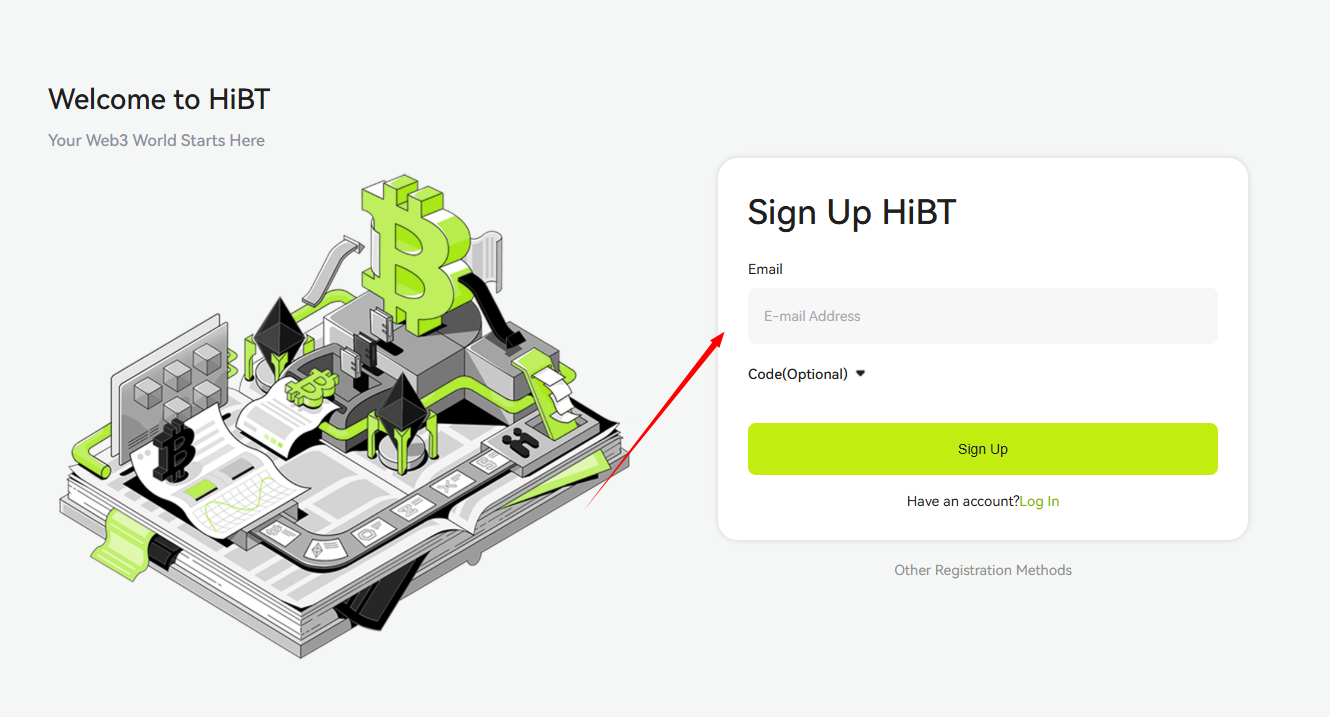
- Exchange Wallet Custody (HiBT): Keeps your assets readily accessible for fast trading, eliminates the personal burden of cryptographic private key storage, and simplifies short-term position management.
- Self-Custodial Wallet Custody (e.g., MetaMask, Rabby, Ledger): Grants you full control over your cryptographic seed phrases, enables direct integration with native DeFi applications, and removes platform counterparty risk.
Important Technical Warning: Because ETH exists across multiple networks (Ethereum Mainnet, Arbitrum, Optimism, Base, Polygon), you must explicitly verify your destination wallet’s network settings match the withdrawal network selected on the exchange. If your goal is to hold native, base-layer ETH, choose the Ethereum Mainnet configuration, while accounting for standard mainnet gas costs. Always leave a fractional ETH reserve inside your self-custodial wallet to cover future transaction gas fees.
VIII. Strategic Summary: Developing a Clear Framework
To summarize Ethereum in a single sentence:
Ethereum functions as the premier global smart contract platform and decentralized settlement layer for digital finance, with ETH acting as its native network gas asset, consensus staking anchor, and core institutional fund substrate.
The core asset class presents a distinct profile from Bitcoin: Bitcoin is optimized for long-term digital value preservation, while Ethereum functions as an active programmable execution engine.
[Deep Capital Concentration] ✖ [Successful Layer 2 Scaling & Value Capture] = Long-Term Valuation Re-Rating
A disciplined investment strategy avoids speculative position entry pacing based on short-term market noise. Instead, it relies on systematic capital deployment through DCA structures, strict alignment with personal risk metrics, and ongoing validation of on-chain fundamental growth.
IX. FAQ: Core Technical Questions Answered
1. Are Ethereum and Ether the exact same thing?
No. Ethereum refers to the underlying open-source public blockchain network infrastructure. Ether (ETH) is the native cryptocurrency token generated by the protocol to settle gas fees, secure consensus staking, and serve as capital within its ecosystem.
2. Is Bitcoin or Ethereum better suited for a beginner's initial portfolio?
For absolute newcomers, Bitcoin’s positioning as a mathematically scarce digital store of value is generally more straightforward to evaluate. Ethereum features an application-driven value model that requires a deeper understanding of smart contracts and gas mechanics. A balanced approach often involves maintaining a core position in both blue-chip assets rather than over-concentrating in one.
3. Is it too late to establish an investment position in ETH?
While entry costs are significantly higher than during early developer cycles, evaluating the asset through a multi-year lens toward 2030 suggests its institutional infrastructure, RWA integration, and global settlement layers are still scaling through mid-stage development cycles.
4. What factors are required for ETH to cross the $10,000 threshold?
Achieving a five-digit valuation multiple requires a sustained confluence of core drivers: persistent capital inflows through institutional ETF channels, scaling stablecoin and tokenized RWA settlement volume on-chain, successful value capture by the base layer from Layer 2 rollups, and a favorable macro monetary liquidity environment.
5. Is participating in Ethereum consensus staking risk-free?
No. Staking deployment carries specific operational risks, including unbonding exit queues during market anomalies, technical slashing penalties if a validator node experiences severe operational faults, and variable reward rates that adjust dynamically based on total network participation.
6. Which entry strategy is preferred: Lump-sum or systemic DCA?
For the vast majority of retail participants, a systematic Dollar-Cost Averaging (DCA) framework is highly preferred. It reduces the emotional pressure of timing volatile market swings and prevents over-allocating capital right before local price peaks.
7. Is it safer to keep my ETH on an exchange or inside a hardware wallet?
For short-term trading strategies or smaller token amounts, retaining your allocation inside a secure exchange wallet provides straightforward accessibility. For larger, multi-year holding horizons, transferring your tokens to a secure self-custodial hardware wallet is recommended to eliminate platform counterparty risk.
8. Can Solana structurally replace Ethereum's position?
Solana delivers clear transaction cost and speed advantages for consumer applications and high-frequency retail trading. However, Ethereum maintains a dominant lead in institutional asset concentration, capital liquidity depth, regulated stablecoin issuance, and enterprise trust. The digital asset landscape points toward a modular, multi-chain future where both architectures serve distinct, specialized functions.