
Within the cryptocurrency market, ZEN is a project that is highly prone to misunderstanding.
When many newcomers see ZEN for the first time, they instantly categorize it as a "privacy coin," which triggers mental associations with Monero, Zcash, regulatory crackdowns, and exchange delistings. While this framing has clear historical accuracy, it is no longer an accurate description.
While Horizen originally developed out of the Zcash technical architecture and previously maintained overt privacy-coin characteristics, its baseline architecture has changed. Following the deprecation of the mainchain shielded pools in 2023, the migration toward the Base ecosystem in 2025, and the ongoing rollout of the Horizen 2.0 roadmap, ZEN has pivoted away from legacy anonymity models. Today, it functions as an application-oriented, compliance-friendly, and modular zero-knowledge (ZK) privacy infrastructure layer.
Analyzing ZEN requires asking a new set of questions:
- Why did it transform from ZenCash into Horizen?
- How does it differ structurally from Zcash, Monero, and Bitcoin?
- What concrete problems do zk-SNARKs, Zendoo, EON, and Horizen 2.0 solve?
- Does ZEN retain long-term structural investment utility?
- How heavily will global regulatory headwinds suppress its price discovery?
- If you choose to acquire it, how do you manage the process safely on HiBT?
This comprehensive guide will break down the project's background, technical mechanics, pricing history, multi-scenario 2026–2030 price predictions, structural risks, and live acquisition pipelines.
Before officially beginning, a quick disclaimer: All projections and analytical references in this text are formulated from public documentation, technical roadmaps, on-chain metrics, and multi-scenario modeling. They do not constitute financial or investment advice. ZEN represents a small-market-capitalization, highly volatile, and regulatory-sensitive digital asset; strict capital allocation and risk mitigation are mandatory.
I. What Exactly is ZEN? How Does it Differ from Bitcoin and Monero?
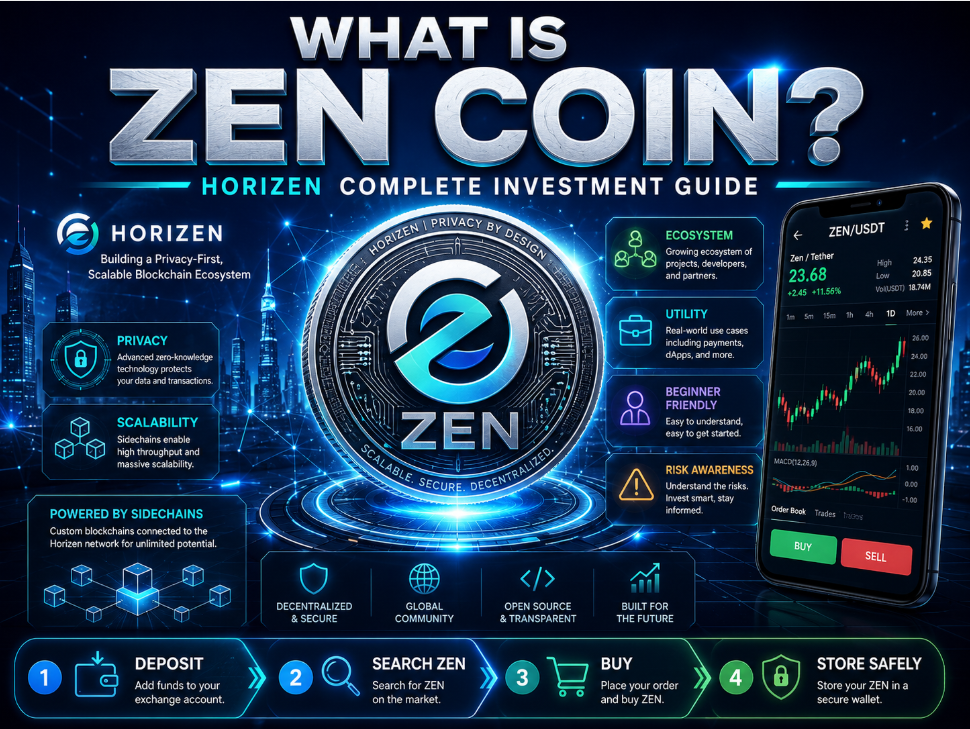
ZEN is the native utility token governing the Horizen blockchain ecosystem.
Horizen's earliest iteration was launched under the name ZenCash, branching directly out of the Zcash technical code framework. Zcash itself was engineered by marrying Bitcoin's fundamental codebase with zero-knowledge cryptographic encryption to achieve private transactions. Consequently, while ZEN shares historical lineage with BTC, ZEC, and XMR, its operational positioning is entirely distinct.
To map out their structural differences:
- Bitcoin optimizes for decentralized scarcity as digital gold.
- Monero prioritizes untraceable peer-to-peer transactional anonymity.
- Zcash provides optional transaction-level cryptographic shielding.
- Horizen has transitioned from a basic privacy asset into an application platform and ZK infrastructure network.
ZEN cannot be evaluated as a clone of Monero or a simple fork of Zcash. It has undergone several structural architectural shifts.
1. The structural evolution from ZenCash to Horizen
The project originally entered the market under the ticker ZenCash. Born out of a Zcash software split, its initial mandate was to build an ecosystem that combined anonymous transacting, secure node networks, encrypted messaging, and decentralized publishing modules.
As the network matured, the core team rebranded the project to Horizen. This went deeper than basic cosmetic marketing; it signaled a pivot from a pure transactional privacy token to a multi-tiered public blockchain ecosystem platform.
This pivot was driven by several core factors:
- Pure privacy-oriented payment transactional tokens face a limited addressable market and struggle to anchor a diverse decentralized application ecosystem.
- Global regulatory crackdowns on pure anonymity networks have increased over time.
- Web3 developers require flexible, modular infrastructure frameworks rather than isolated, monolithic chains.
- Zero-knowledge cryptography offers utility beyond anonymity, serving as an exceptional tool for network scalability, data verification, and opt-in compliance privacy.
Horizen changed its engineering priority to modular sidechains, Zendoo scaling engines, EVM integrations, and Horizen 2.0. The asset is designed to function as the underlying gas and economic substrate for custom, privacy-focused modular appchains.
2. The implications of its Zcash architectural lineage
By developing directly out of the Zcash code repository, Horizen inherited a native technical foundation centered on zero-knowledge encryption and advanced transaction hiding.
The cornerstone tech driving this capability is zk-SNARKs (Zero-Knowledge Succinct Non-Interactive Argument of Knowledge). This cryptographic method allows a user to cryptographically prove that a piece of information or a transaction ledger state is completely valid without revealing any of the underlying private data parameters (such as wallet addresses or transfer volumes).
While this cryptographic gene placed ZEN in the privacy sector early on, the network branched out into its own architecture by deploying a massive multi-tiered node framework, engineering the custom Zendoo cross-chain validation engine, launching the EON EVM execution layer, and migrating toward the Base L2 ecosystem to focus on modular, compliant application privacy.
3. Can ZEN still be classified as a privacy coin?
This is a critical detail that investors must understand clearly.
While early iterations of ZEN supported mainchain privacy configurations via shielded pools, the Horizen community passed a binding governance proposal in June 2023 to completely deprecate all mainchain shielded pool features. This change removed all structural transactional anonymity directly at the core consensus layer.
This strategic architectural shift means:
- ZEN does not support default transactional anonymity like Monero.
- The project actively mitigated the risk of sudden, terminal delistings driven by global regulatory mandates targeted at pure privacy networks.
- The ecosystem changed its technical focus from simple hidden payments to verifiable application privacy, on-chain data security, and opt-in corporate auditing.
- The token's core narrative changed from a simple privacy currency to a ZK infrastructure utility asset.
For investors, this structural pivot functions as a double-edged sword. It significantly lowers the risk of compliance delistings from mainstream bursa platforms, but it also means losing the direct speculative interest that typically flows into pure anonymity assets during privacy-focused market rotations.
Today, ZEN is more accurately classified as a privacy-centric blockchain infrastructure asset focused on zero-knowledge execution and modular appchain integration.
4. Understanding Horizen's Layer 0 architecture
With the market heavily saturated with Layer 1 networks and Layer 2 scaling layers, the concept of a Layer 0 protocol requires a clear explanation:
- Layer 1 represents base settlement layers like Bitcoin, Ethereum, or Solana.
- Layer 2 functions as scaling networks anchored directly into a Layer 1, such as Arbitrum or Base.
- Layer 0 operates as an underlying interoperability framework engineered to spin up, connect, and secure distinct, independent application-specific blockchains or custom sidechains.
Horizen historically deployed this strategy via its custom Zendoo framework, allowing independent developers to deploy custom appchains with tailored execution configurations, bespoke tokenomics models, and specialized privacy properties, while securing their overall state on the main network using zk-SNARK proofs.
Under the Horizen 2.0 deployment framework and its Base migration tracks, this architecture has evolved. The project has shifted away from scaling isolated legacy mainchains toward establishing an integrated, privacy-centric Layer 3 appchain ecosystem built natively on top of the Base Layer 2 network.
5. The 21-million hard cap: Comparing ZEN's supply economics to Bitcoin
ZEN features a maximum, hardcoded supply limit of exactly 21 million tokens, mirroring the exact supply architecture of Bitcoin.
This scarcity feature delivers several clear economic properties:
- The long-term maximum token dilution ceiling is completely transparent.
- The asset does not suffer from unexpected, programmatic emission shocks.
- It aligns easily with market narratives centered on mathematical scarcity.
- If organic application demand expands, a fixed supply cap can significantly improve price elasticity.
ZEN incorporates an automated block-reward halving cadence similar to Bitcoin, where new token issuance drops by 50% over set cyclical intervals to continuously lower structural inflation. However, supply-side scarcity alone cannot guarantee price appreciation; a capped asset requires strong utility and transaction volume to drive sustainable value.
The ultimate market valuation of ZEN will depend on the successful execution of Horizen 2.0, user acquisition stemming from the Base layer migration, active transaction volumes on its custom L3 privacy chains, and the broader utility incentives built around the token.
6. Why did Grayscale establish a dedicated Horizen Trust?
Grayscale Investments previously launched a dedicated single-asset investment vehicle: the Grayscale Horizen Trust. This institutional product provided accredited investors with direct exposure to ZEN through a traditional investment framework.
The existence of this trust provided important validation for the asset:
- It demonstrated that ZEN met the structural compliance and technical bar required for institutional fund structuring.
- Traditional allocators could capture regulated portfolio exposure to the asset without managing raw private key infrastructure.
- It confirmed that institutional research groups recognized the long-term potential of zero-knowledge privacy and sidechain architectures.
While the trust provides historical institutional validation, retail allocators must evaluate it objectively. Single-asset trusts outside of major digital assets often maintain modest aggregate assets under management (AUM) and can experience thin secondary market liquidity. Its presence serves as a long-term institutional endorsement, but future market demand remains dependent on the implementation of the Horizen 2.0 roadmap.
II. Core Technical Infrastructure: Demystifying zk-SNARKs and Zendoo
Evaluating the long-term fundamental value of the Horizen ecosystem requires looking closely at its two underlying core technical mechanisms: zk-SNARKs and the Zendoo protocol. The former governs its zero-knowledge cryptographic verification capabilities, while the latter serves as its custom cross-chain validation framework.
1. What exactly is a zk-SNARK?
The acronym translates technically to Zero-Knowledge Succinct Non-Interactive Argument of Knowledge. This complex cryptographic framework can be understood through a simple real-world analogy.
Imagine you need to prove to an external party that you know the exact combination to a high-security vault, but you are completely unwilling to reveal the actual numerical code parameters to them:
- In a standard verification environment, you would have to enter the code directly in front of them, exposing your private information.
- In a zero-knowledge validation environment, you step inside the vault room alone, successfully unlock the door from the inside, and step back out. The observer gains definitive cryptographic certainty that you possess the correct knowledge, without ever seeing the code parameters.
Transposed onto a blockchain architecture, zero-knowledge proofs unlock essential computational features:
- Confirming transaction validity without exposing wallet addresses or transfer quantities.
- Verifying account balances without broadcasting total net worth metrics to the public ledger.
- Auditing complex state calculations while keeping the underlying dataset private.
- Packaging thousands of transactions on an independent sidechain into a compact cryptographic proof, allowing the underlying settlement chain to verify the state update without processing every transaction individually.
This illustrates why zero-knowledge cryptography remains a core structural layer of contemporary blockchain infrastructure. It has evolved beyond basic payment privacy to become a foundational tool for network scaling, compliance-friendly identity tracking, on-chain data protection, and enterprise database settlement.
2. What structural problem does the Zendoo engine solve?
The Zendoo engine serves as Horizen's custom cross-chain verification architecture. It was engineered to let developers spin up independent sidechains that communicate with the parent network through a reliable verification framework.
Traditional, monolithic blockchain designs force all decentralized applications to compete for block space on a single, shared ledger. This structure leads to severe network congestion, high gas fees, and governance deadlocks during peak utilization.
The modular sidechain model solves this by allowing specialized applications to run on their own custom chain layers, complete with dedicated execution rules and tailored fee economics. The defining characteristic of Zendoo includes:
- Giving developers the freedom to deploy independent sidechains running bespoke consensus mechanisms.
- Allowing sidechains to build unique, customized tokenomic models.
- Enabling custom-tailored data privacy configurations at the application level.
- Removing the need for the parent chain to track or process every internal sidechain transaction.
- Utilizing zk-SNARK validation proofs to verify cross-chain asset transfers and sidechain state updates on the main network.
Think of the parent ledger as a corporate headquarters and the independent Zendoo sidechains as modular regional offices. Each office handles its own day-to-day operations and specialized localized workflows, but they regularly route compact, audited compliance statements back to the main headquarters. The parent ledger can verify the overall validity of those offices without needing to audit every internal ledger entry.
3. How does Zendoo contrast with Ethereum Layer 2 scaling layers?
While both architectures are engineered to scale execution throughput and offload core computational strain from a base ledger, their design philosophies differ:
- Ethereum Layer 2 Rollups aggregate thousands of off-chain transactions, batch them into single blocks, and route execution proofs directly to Ethereum for settlement. This approach leverages Ethereum's massive economic security, utilizes its deep liquidity pools, taps into its large developer base, and integrates with standard Web3 wallets.
- The Zendoo Engine focuses on providing full sovereign flexibility to independent sidechains. This setup allows developers to engineer custom consensus rules and unique tokenomics models tailored for enterprise or specialized application environments, while using zk-SNARK validation to maintain secure connections with the parent network.
However, sovereign flexibility introduces distinct ecosystem trade-offs: Zendoo sidechains operate with a smaller overall developer network, navigate thinner baseline asset liquidity pools, and require continuous marketing effort to match the broad consumer mindshare commanded by dominant Ethereum Layer 2 networks.
4. The role of Horizen EON
Horizen EON was deployed as the first EVM-compatible smart contract platform built on top of the Zendoo sidechain architecture.
Ethereum Virtual Machine (EVM) compatibility is highly advantageous for alternative networks. It allows Web3 developers to deploy dApps using familiar Ethereum development tools, including MetaMask, Solidity smart contract structures, Hardhat, Remix, and standard RPC endpoint connections. Without EVM compatibility, a network requires developers to learn new, non-standard programming languages and customized software toolkits, which introduces significant friction to ecosystem migration.
While EON served as an important step in proving Horizen's smart contract execution capabilities, the project’s technical roadmap under Horizen 2.0 has evolved. The legacy ZEND and EON sidechain frameworks are being phased down as the ecosystem pivots toward building privacy-centric Layer 3 appchains natively inside the Base Layer 2 ecosystem.
5. Horizen's multi-tier node architecture vs. standard PoW validation
Historically, Horizen maintained one of the largest decentralized infrastructure footprints in Web3 via a multi-tiered node framework that included:
- Regular Nodes
- Secure Nodes
- Super Nodes
Unlike traditional Proof-of-Work (PoW) miners that focus strictly on processing transactions and competing for block rewards via raw hardware hash power, Horizen's advanced node layers were engineered to provide functional utility to the network. These secure node tiers were tasked with maintaining end-to-end encrypted communication networks, tracking sidechain validation parameters, and providing stable infrastructure for decentralized applications.
As the network shifts toward its Horizen 2.0 framework, this multi-tier node architecture is undergoing systematic restructuring. Legacy Secure Node rewards are being phased out as the network transitions toward modern Proof-of-Stake (PoS) consensus models, standard token staking frameworks, and L3 validation layers. This highlights the importance of evaluating the project using its current roadmap rather than outdated technical documentation.
6. The structural upgrades of Horizen 2.0
Horizen 2.0 is the core technical framework defining the contemporary value proposition of ZEN. Under this updated architecture, the ecosystem is moving away from isolated, legacy layer-0 sidechains to re-anchor its utilities directly within the Base Layer 2 network as a hub for compliant, application-specific privacy solutions.
The core upgrades on this technical roadmap include:
- Migrating ZEN utility parameters into standard ERC-20 token frameworks natively deployed on Base.
- Deprecating legacy ZEND and EON sidechain architectures to reduce infrastructure fragmentation.
- Deploying a dedicated 1-million ZEN Ecosystem Fund to incentivize external developer onboarding.
- Launching a modular Horizen Layer 3 testnet and subsequent mainnet architecture.
- Launching the Horizen Confidential Compute Environment to protect execution data.
- Enabling opt-in, compliance-friendly auditing mechanics directly inside Web3 privacy dApps.
This structural shift alters the underlying utility profile of the ZEN token. Rather than serving as a basic payment coin on a PoW chain, ZEN's updated utility architecture is designed to capture value across decentralized governance models, ecosystem staking pools, L3 network fee execution, and accessing confidential execution services on Base.
To compare Horizen's modular expansion against the structural technical trajectory of the broader Ethereum ecosystem, you can reference our deep dive in the 2030 Ethereum (ETH) Price Prediction.
III. Historical Price Action: Evaluating the 95%+ Market Retracement
The long-term price history of ZEN shows intense volatility, moving through powerful bull market expansions followed by deep, multi-year cyclical devaluations. For disciplined asset allocators, studying this history is critical to understanding the token's real-world risk boundaries and volatility parameters.
[2021 Bull Market Peak: ~$169] ➔ [Extended Cyclical Correction] ➔ [2026 Liquidity Channel: $4–$6]
1. What drove the price correction from $169 down to the single-digit range?
ZEN reached its historical peak near $169 during the 2021 bull market expansion. By 2026, the asset consolidates within a stable trading channel fluctuating between $4 and $6. This correction represents a peak-to-trough retracement of over 95%.
While a value contraction of this scale appears severe under traditional equity models, it is a regular feature of alternative small-cap digital assets navigating deep bear market cycles. This extended correction stems from several structural factors:
- The Macro Liquidity Shift: The transition from the highly expansive monetary policies of 2021 to strict global quantitative tightening forced a sweeping re-pricing of all speculative, alternative layer-1 networks.
- Speculative Premium Contraction: During the 2021 cycle, the token captured an outsized valuation premium based on early sidechain promises. When organic transaction fees and dApp adoption lagged behind these multi-billion-dollar speculative projections, market valuations returned to baseline levels.
- Regulatory Headwinds on Anonymity Assets: Increasing global compliance mandates targeting privacy networks created persistent selling pressure and market uncertainty, keeping valuations depressed.
- Infrastructure and Narrative Fragmentation: Managing isolated, non-EVM sidechain ecosystems created operational friction, splitting developer mindshare away from the network toward mainstream scaling solutions.
2. Evaluating the catalysts behind the 2021 peak expansion
The multi-fold expansion that drove ZEN to its historical high of $169 was fueled by a convergence of several key tailwinds:
- Strong macro bull market conditions that drove capital down the risk curve into alternative layer-1 networks.
- Elevated speculative interest surrounding zero-knowledge cryptography and decentralized privacy infrastructure.
- Institutional visibility and validation generated by the presence of the Grayscale Horizen Trust.
- Expanding market interest in modular sidechain scaling engines and multi-tier secure node architectures.
- A clear, fixed supply ceiling of 21 million tokens, which amplified upward price action as demand velocity spiked.
3. Analyzing the historical impact of the 2018 51% network exploit
Early in its operational history, during the ZenCash era in 2018, the network suffered a 51% hash power exploit. This occurs when an attacking entity successfully captures more than half of a blockchain's mining computational power, allowing them to temporarily alter block order, execute double-spend transactions, and disrupt consensus validation trust.
This security exploit impacted the project in several ways:
- It highlighted the inherent security vulnerabilities faced by smaller, low-hash-rate Proof-of-Work blockchains.
- The network was forced to implement urgent protocol modifications and upgrade its node verification rules to harden the blockchain against block-reorganization exploits.
- The subsequent rebranding from ZenCash to Horizen served as a strategic initiative to rebuild trust with market participants, bursa networks, and ecosystem developers.
The fact that the project survived this early exploit and maintained active development shows a resilient core team and community. However, it serves as a reminder to investors that technical design security must be backed by sufficient network cost-of-attack metrics to protect capital effectively.
4. Interpreting the 2025 relief spikes and ongoing volatility
During the 2025 trading year, ZEN experienced sharp, episodic relief rallies, briefly breaking out of its lows before returning to its baseline $4–$6 support channel.
These short-term price movements are typical for small-market-capitalization assets and are generally driven by specific catalysts: brief capital rotation cycles into deeply discounted legacy networks, speculative position positioning around the Horizen 2.0 roadmap announcements, and short-term liquidity injections linked to its Base L2 appchain migration.
These sharp rallies confirm that the token retains high price elasticity and a responsive trader base. However, the subsequent pullbacks demonstrate that sustaining a long-term structural breakout requires more than roadmap announcements; it requires a measurable expansion in on-chain transaction fees, active dApp users, and locked liquidity.
5. Evaluating ZEN's structural correlation with Bitcoin
As an alternative, small-cap asset, ZEN trades with a high mathematical correlation to Bitcoin’s overarching liquidity cycles. In typical crypto market expansions, capital flows through a structured rotation pathway:
[Bitcoin Spot Capital Inflow] ➔ [Ethereum Blue-Chip Expansion] ➔ [Large-Cap Layer 1 Platform Tokens] ➔ [Small-Cap Alternative Infrastructure & Niche Sectors]
ZEN rarely initiates an independent bull expansion while Bitcoin is in the early stages of breaking out. Instead, it tends to catch momentum during late-stage altcoin rotations, when capital seeks out high-elasticity, small-cap assets that feature historical institutional validation and deep valuation discounts. Consequently, evaluating entry windows for ZEN requires assessing both standalone project milestones and broader macro liquidity indicators across the crypto market.
IV. 2026–2030 Long-Term Valuation Modeling: Analyzing the Disparity
Long-term price forecasts for ZEN exhibit a significant variance across analytical desks, with projections spanning a 10x range. Conservative algorithmic models project the token will fluctuate tightly between $5 and $15 out to 2030, while optimistic structural models suggest it could re-target the $50 to $150+ range under specific market conditions.
This wide disparity highlights that different forecasting models emphasize completely different operational assumptions.
1. The Underlying Assumptions of Conservative Models
Conservative valuation models focus primarily on current spot trendlines, daily trading volumes, and active on-chain adoption metrics. Their projections are based on several key assumptions:
- Alternative small-cap assets face an uphill battle to recapture historical valuation peaks once capital consolidates into dominant layer-1 and layer-2 ecosystems.
- Evolving global compliance and anti-money laundering (AML) mandates will continue to place structural limits on assets associated with privacy branding.
- On-chain dApp counts and total value locked (TVL) on Horizen networks remain low relative to mainstream smart contract environments.
- The technical migration to the Base ecosystem requires a prolonged timeline to establish real value capture for the token.
These models project a slow, measured valuation recovery, setting near-term targets between $4 and $8, and capping long-term 2030 expectations between $12 and $30.
2. The Underlying Assumptions of Optimistic Models
Optimistic valuation models place higher weight on the asset's structural scarcity, its long history with ZK architecture, its integration into the high-liquidity Base L2 ecosystem, and the expanding demand for modular, compliance-friendly privacy layers. Their projections assume:
- A strict hard cap of 21 million tokens can amplify upward price elasticity as demand scales.
- The Horizen 2.0 roadmap successfully solves legacy user acquisition hurdles by integrating directly with Base’s massive developer and user base.
- The 1-million ZEN Ecosystem Fund succeeds in onboarding high-growth privacy-centric dApps.
- Re-establishing clear token staking incentives and L3 gas utility generates consistent, non-speculative buying pressure.
These models project potential long-term valuation targets of $50, $90, or up to $150+ by 2030.
3. Can the 1-Million ZEN Ecosystem Fund act as a sustainable growth driver?
The deployment of the 1-million ZEN Ecosystem Fund represents a key catalyst for shifting the Horizen 2.0 framework from a technical roadmap into an active application ecosystem.
The fund is structurally targeted at incentivizing developer teams across several key Web3 sectors:
- Privacy-preserving Decentralized Finance (DeFi) protocols.
- Confidential data-routing engines for AI and machine learning networks.
- Web3 gaming platforms requiring private state calculations.
- Compliance-friendly, auditable privacy tools and zero-knowledge ID networks.
- Modular, cross-chain privacy bridges.
If utilized effectively, this fund can improve the network's fundamental metrics by lowering capital barriers for external developers, expanding the number of active mainnet dApps, and generating real gas consumption utility for the token. However, if the incentives function merely as short-term capital subsidies without fostering organic user retention, the long-term impact on the token's value will remain limited. Investors should track active transaction volume, unique wallet interactions, and TVL growth on these funded platforms to gauge the fund's real-world efficacy.
4. Four Core Variables Shaping ZEN's 2030 Horizon
- Variable 1: The Global Regulatory Trajectory on Privacy Tech. The critical macro factor is whether global regulatory frameworks distinguish between non-compliant transactional mixers and legitimate, compliance-friendly zero-knowledge data protection layers.
- Variable 2: Execution Efficiency of the Horizen 2.0 Migration. The primary ecosystem metric is whether the network can successfully attract active developers and liquidity away from monolithic chains onto its custom Base-hosted L3 privacy layers.
- Variable 3: Structural Value Capture of the Updated Tokenomics. Investors must track whether the transition to modern Proof-of-Stake consensus, L3 gas execution, and network staking pools generates consistent, structural utility demand for the token.
- Variable 4: Macro Liquidity and Altcoin Rotation Windows. As a small-cap asset, ZEN remains highly dependent on expansive macro liquidity environments to fuel sustained, multi-stage valuation recoveries.
5. Multi-Scenario Price Projections for ZEN (2026–2030)
2026 Projections
- Bear Case (~$3.50): Macro liquidity contracts significantly, the Base layer migration fails to onboard meaningful active dApps, and regulatory headwinds keep alternative small-cap assets under intense market pressure.
- Base Case (~$8.00): The asset completes a stable valuation recovery as the Horizen 2.0 roadmap reaches key engineering milestones, and initial L3 testnet rollouts re-engage core developer interest.
- Bull Case (~$25.00): Broad altcoin market rotation catches momentum, driven by a surging Bitcoin. ZEN's staking models, Base ecosystem incentives, and ZK privacy narratives align to drive an accelerated re-rating.
2027 Projections
- Bear Case (~$5.00): Ecosystem adoption proceeds slower than projected, leaving the token to consolidate within a low-interest trading range.
- Base Case (~$15.00): The first wave of Base-hosted privacy applications goes live, creating baseline utility transaction volume and steady staking participation.
- Bull Case (~$40.00): Confidential compute applications, privacy-focused DeFi layers, and ZK identity modules onboard active consumer users, driving a strong fundamental re-rating.
2028 Projections
- Bear Case (~$7.00): Post-halving market dynamics fail to trigger broad altcoin capital deployment, keeping alternative infrastructure assets pinned near cyclical lows.
- Base Case (~$25.00): Riding a rising macro market tide, Horizen's ecosystem metrics show steady improvements in transaction volume, lifting the asset back into its mid-range technical zones.
- Bull Case (~$65.00): Zero-knowledge data protection establishes itself as a core narrative across Web3 infrastructure, and Horizen’s appchains capture deep liquidity inflows within the Base L2 ecosystem.
2029 Projections
- Bear Case (~$10.00): The network maintains stable infrastructure operations but fails to capture mainstream application market share, limiting its valuation premium.
- Base Case (~$35.00): The protocol cements its position as a specialized, compliance-friendly privacy execution layer on Base, building a sustainable fundamental valuation floor.
- Bull Case (~$90.00): Strong macro bull market conditions align with accelerating network adoption, driving the asset's valuation toward historical macro resistances.
2030 Projections
- Bear Case (~$12.00): The network remains active but operates as a niche infrastructure asset with limited ecosystem transaction density, resulting in an underwhelming long-term recovery.
- Base Case (~$50.00): The Horizen 2.0 framework achieves its core goals, establishing steady, long-term utility demand for ZEN across L3 gas execution, staking mechanics, and decentralized governance.
- Bull Case (~$150.00): A best-case macro super-cycle scenario: zero-knowledge privacy tech achieves massive enterprise adoption, Horizen’s L3 ecosystem scales extensively within Base, and global liquidity drives aggressive re-ratings across scarce infrastructure assets.
Long-Term Structural Target Framework
- Below $5: Reflects deep market caution and extended cyclical capitulation.
- $8–$15: Represents a baseline, structural fundamental valuation recovery.
- $25–$50: Requires verified execution across staking pools and live appchain dApps.
- $65–$90: Conditioned on a strong altcoin bull run and a resurgent privacy narrative.
- Approaching $150+: Demands the absolute alignment of a macro super-cycle and extensive enterprise adoption.
V. Is ZEN a Viable Investment? Key Structural Considerations
Allocating capital to ZEN requires balancing its clear asymmetric catalysts against its structural risks. It operates as a highly volatile, specialized infrastructure asset that is currently navigating an extensive technical transformation.
Key Catalysts Supporting the Token
- Mathematical Scarcity Architecture: A fixed 21 million hardcap ceiling mirrors Bitcoin’s supply dynamics, providing strong price elasticity if demand velocity expands.
- Established Zero-Knowledge Pedigree: The development team possesses extensive, multi-year engineering experience working with zk-SNARK cryptography, positioning it well for an environment focused on ZK architecture.
- A Pragmatic Structural Pivot: The Horizen 2.0 framework addresses historical user acquisition friction by transitioning from isolated legacy mainchains to deploy native L3 frameworks inside the high-liquidity Base ecosystem.
- Historically Discounted Entry Points: Trading at a 95%+ markdown relative to historical peaks minimizes downside risk from a technical standpoint, offering an asymmetric risk-reward profile if fundamentals improve.
- Legacy Institutional Visibility: Its long history with top-tier investment trusts demonstrates that the asset's baseline technical standards have previously cleared stringent institutional compliance evaluations.
Critical Risks to Mitigate
- Evolving Regulatory Pressures: Global regulatory oversight regarding privacy technology remains intense, exposing any project associated with privacy branding to ongoing compliance uncertainty.
- The Moat Deficit of Alternative Ecosystems: The network's current on-chain TVL, active dApp count, and daily developer metrics are small compared to dominant layer-1 and layer-2 smart contract platforms.
- The Execution Risks of Major Upgrades: Re-engineering a blockchain's core architecture and migrating its asset utilities to external layer-2 networks introduces significant execution and timing risks.
- Ecosystem Liquidity Vulnerabilities: Small-market-capitalization assets routinely experience thinner order book depth, exposing positions to larger price swings during periods of macro market stress.
- The Low Unit Price Misconception: Investors must avoid treating a low nominal unit price as an automatic signal of undervaluation, and instead focus on tracking active market cap metrics and structural token demand velocity.
To calibrate your risk modeling against the structural mechanics of the primary digital asset market, you can reference our cyclical analysis in Is it a Good Time to Buy Bitcoin Now?.
VI. Step-by-Step Tutorial: How to Safely Buy ZEN on HiBT
If you have completed your fundamental research and decided to execute a small position allocation, your priority shifts to operational safety. Navigating order entries, matching deposit networks, and validating address fields correctly prevents costly operational mistakes.
1. Why consider HiBT for your ZEN transactions?
Executing spot orders for small-market-capitalization infrastructure assets requires a trading platform that delivers reliable order book liquidity, verified security architectures, clean compliance registrations, and streamlined user paths.
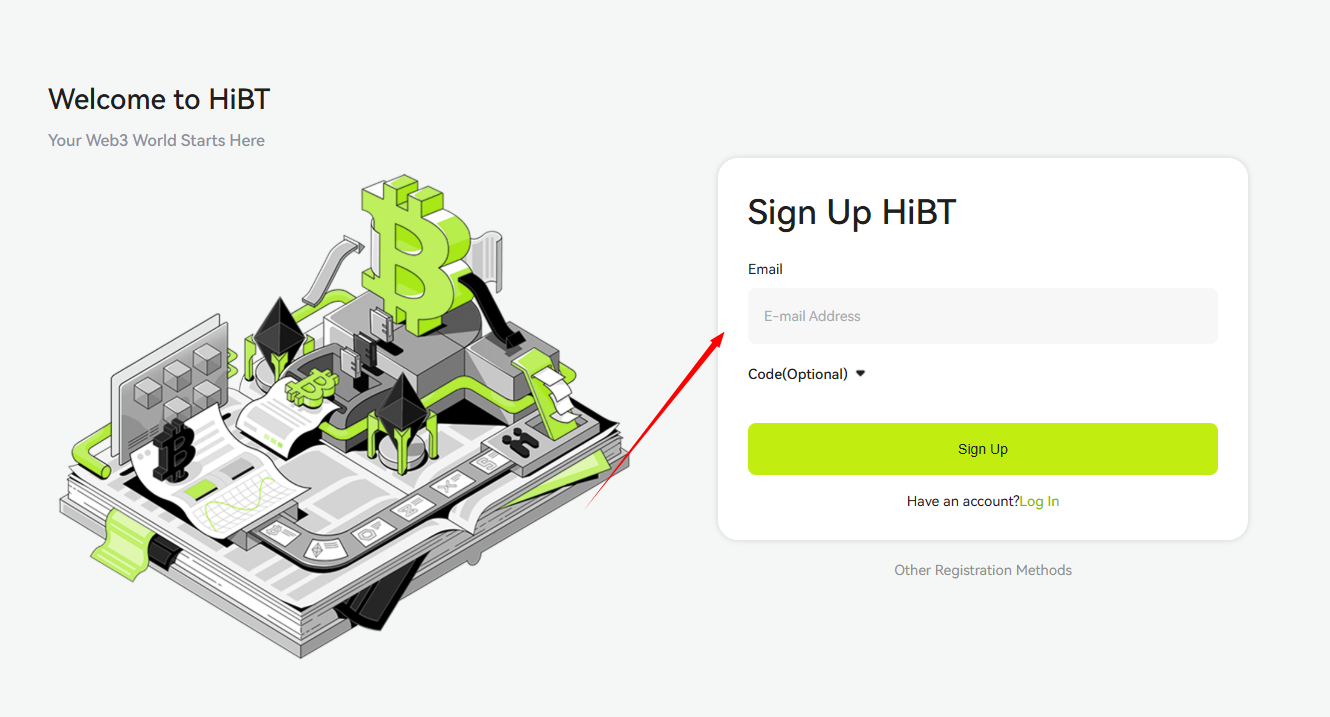
HiBT provides a liquid spot trading corridor for the ZEN/USDT asset pair. Platform profiles emphasize international corporate registrations, active MSB designations within North American jurisdictions, and a security framework built on 90% offline cold wallet multi-signature architectures.
Key trading features on HiBT include:
- A direct, liquid spot marketplace for the ZEN/USDT pair.
- An intuitive trading layout matching industry standards.
- Straightforward search functionality to easily access targeted asset pairs.
- Full support for market execution and precision limit orders.
- The ability to use standard liquid USDT as your base quote currency.
2. Account Registration and Security Hardening
To initialize your user profile safely:
- Navigate to the official HiBT web portal or download the mobile application via verified distribution stores.
- Select the registration panel and initialize your account using a verified email address or active mobile number.
- Construct an advanced, high-entropy password.
- Input the system-generated verification code to complete your basic setup.
- Immediate Security Configuration: Navigate directly to your security control panel to activate two-factor authentication (2FA) via Google Authenticator, establish an independent asset funding password, and configure unique anti-phishing codes.
3. Completing KYC Identity Verification
Central compliance standards require identity verification to unlock full funding and withdrawal privileges. To complete the KYC pipeline, ensure you have:
- A valid government-issued ID card, international passport, or regional driver's license.
- A clear smartphone camera for live facial recognition scanning.
- Verifiable details regarding your primary country or region of residence.
Ensure all uploaded documentation is completely legible, free from artificial glare, and displays all border lines clearly. Avoid using expired credentials or relying on third-party verification brokers.
4. Accessing Onboarding Incentives
If the bursa is hosting active promotional tracks or new user welcome tasks, details are typically highlighted via the primary app banner, deposit dashboard, or mission center. Standard incentives include spot fee discount credits, trading rebates, or asset allocation vouchers.
Always read the fine print before chasing promotional parameters: Verify the precise time windows allowed for completion, required net funding amounts, applicable asset pair boundaries, and specific rules regarding reward redemption or withdrawal limitations.
5. Funding Your Account Wallet
Acquiring ZEN typically involves funding your account with USDT to swap for the asset.
Method A: Direct Fiat On-Ramps
If the platform supports native fiat integrations within your region, you can purchase USDT directly using supported bank wires, debit cards, or local payment channels. Review the comprehensive quote breakdown to confirm the fiat purchase amount, net USDT to be credited, processing fees, and expected processing times.
Method B: On-Chain Multi-Network Deposits
If transferring pre-existing USDT balances from an external Web3 wallet or alternative exchange platform, matching your selection to the correct blockchain network is critical. USDT moves across numerous layer-1 and layer-2 networks (ERC20, TRC20, BEP20, Arbitrum, Polygon). You must ensure absolute alignment across all three data points:
- The withdrawal chain selected at your external source wallet.
- The network choice checked on the HiBT deposit interface.
- The specific network configuration of the generated deposit address string.
If a network mismatch occurs, your digital assets will be permanently lost on the ledger. Always process a small test transfer (e.g., 5-10 USDT) to confirm successful processing before routing your full balance.
6. Executing Your ZEN Order on HiBT
With a clear USDT balance now loaded in your spot wallet, you are ready to complete your purchase:
- Enter the Spot Market Desk: Head directly to the main trading interface and select the spot market module.
- Locate the Trading Pair: Type "ZEN" into the asset search bar and select the official ZEN/USDT spot trading corridor. Double-check to ensure you haven't selected a similarly named ticker.
- Analyze the Trading Desk: Familiarize yourself with the interface displaying live spot price feeds, candlestick charts, the real-time order book, recent transaction logs, and the order configuration module.
- Choose Your Execution Order Type:
- Market Order: Instantly fills your order at the best available price in the live order book. This is the simplest choice for smaller, exploratory positions where execution speed is favored over precise pricing.
- Limit Order: Allows you to define your exact maximum purchase price. The trade only executes if the market drops to your designated level, offering strict cost control and protection against slippage in thinner order books.
- Define Your Position Size: Specify the exact volume of USDT you wish to deploy or the net quantity of ZEN you want to secure. Double-check your values to ensure all decimal placements and totals are correct.
- Confirm and Execute: Click the Buy button. You can track your order status through the Open Orders or Transaction History logs at the bottom of your workspace.
7. Mitigating Slippage Risks in Small-Cap Asset Environments
Slippage occurs when a market order executes at a less favorable price than expected due to thin liquidity depth in the order book. When managing positions in alternative assets, protecting your entry costs requires specific trading discipline:
- Avoid routing large capital blocks through single market orders; utilize limit orders to guarantee your maximum execution price.
- Break larger target positions down into smaller tranches and execute them over extended intervals.
- Check the live bid-ask spreads and order book depth before routing entries.
- Avoid entering orders during periods of extreme macro market volatility or thin weekend liquidity channels.
- Do not chase sudden, vertical green candles immediately following programmatic news announcements.
8. Post-Purchase Custody Decisions
Once your spot order fills, determine the right custody strategy based on your investment horizon:
- Exchange Custody (HiBT): Keeps your capital instantly accessible for trading or reallocation, removes the personal burden of cryptographic key storage, and simplifies active portfolio management for shorter-term strategies.
- Self-Custodial Wallet Custody: Grants you direct control over your private keys and seed phrases, removes platform counterparty risk, and allows you to interact natively with on-chain applications.
Important Technical Warning: Because the Horizen network is actively executing its Horizen 2.0 technical roadmap—which includes shifting asset configurations into standard ERC-20 frameworks on Base—you must explicitly verify which blockchain network your self-custodial wallet is set to before initializing a withdrawal. Never mix legacy mainchain addresses, EON configurations, and Base ERC-20 address fields.
9. Three Critical Operational Mistakes Beginners Must Avoid
- Network Identification Mismatches: The ongoing migration across distinct network phases (legacy mainchain, EON sidechain, and Base layer ERC-20 structures) increases the risk of addressing errors. Confirm that your destination wallet’s network settings match the withdrawal network selected on the exchange.
- Underestimating Gas Asset Reserves: If you choose to withdraw your tokens to an external Web3 wallet on the Base network, executing future on-chain interactions will require a small allocation of native Base gas assets (ETH). Ensure your wallet holds a fractional gas reserve to prevent your assets from being stranded.
- Address String Validations and Clipboard Security: Never manually type out long cryptographic hexadecimal address strings. Utilize direct copy-paste functions or trusted QR code scans, and manually cross-verify the first 6 and last 6 characters of the string before confirming any transfer. Maintain rigorous device security to protect your clipboard from malicious address-swapping malware.
VII. Strategic Summary: Navigating the Technical Transformation
To summarize ZEN in a single sentence:
ZEN is the native utility token of the Horizen ecosystem, transitioning from its historical roots as a legacy privacy coin to establish itself as a compliance-friendly, zero-knowledge appchain execution layer natively integrated within the Base Layer 2 ecosystem.
The core investment proposition relies on an asset with an established technical history and a strict 21-million token hardcap, which is undergoing a deliberate architectural pivot to capture high-growth modular infrastructure narratives.
[Fixed 21M Token Hardcap] ✖ [Successful Base L3 Ecosystem Scaling] = Long-Term Valuation Re-Rating
Sustaining a long-term structural valuation recovery requires the project to successfully translate this architectural shift into active mainnet application deployments, growing transaction fee revenue, and expanding developer adoption.
Actionable Next Steps
- Analyze Live Fundamental Metrics: Review ZEN's live trading corridors to evaluate its circulating market cap, current liquidity distribution, and active supply metrics rather than focusing on its nominal unit cost alone.
- Monitor Roadmap Implementation Milestones: Review the active implementation status of the Horizen 2.0 rollout, tracking L3 testnet performance, ecosystem grant deployments, and live transaction volumes on Base.
- Execute a Secure Baseline Order: If the asset lines up with your portfolio parameters, initialize your account on HiBT, complete basic verification, fund a small test amount of USDT, and execute a structured spot entry to familiarize yourself with the asset's operational flow.
VIII. FAQ: Core Questions Answered
1. Is ZEN still classified as a privacy coin?
Strictly speaking, ZEN no longer functions as a traditional privacy coin. Following a binding community governance vote in 2023, all mainchain shielded pool features were deprecated, completely removing transactional anonymity at the consensus level. Today, it operates as a compliance-friendly zero-knowledge infrastructure layer focused on secure data processing and auditable application privacy.
2. What is the technical relationship between ZEN and Zcash?
Horizen originally developed out of a Zcash technical code fork, inheriting its native zero-knowledge cryptographic DNA and core experience with zk-SNARK protocols. However, the ecosystem has since branched into an independent architecture by developing custom sidechain validation engines and migrating its core utility hub directly into the Base L2 ecosystem.
3. What is the maximum hardcap limit of ZEN?
The maximum lifetime supply of ZEN is hardcoded at exactly 21 million tokens, utilizing the same mathematical scarcity model deployed by Bitcoin.
4. What primary factors drove the asset's long-term price correction?
The peak-to-trough retracement was driven by a combination of macro market shifts following the 2021 bull run, decreasing retail liquidity across alternative layer-1 chains during the subsequent bear cycle, persistent compliance headwinds targeting privacy branding, and the technical friction involved in managing isolated, non-EVM legacy sidechains.
5. Can ZEN realistically trade above $100 again by 2030?
Achieving a valuation break back above the $100 threshold is possible but conditional on a strict set of market catalysts: a robust macro bull environment led by BTC, broad market capital rotation into zero-knowledge data infrastructure, the successful deployment and scaling of its Base-hosted L3 appchains, expanding token staking utility, and stable global compliance frameworks.
6. Is ZEN an appropriate asset choice for absolute beginners?
ZEN represents a small-market-capitalization infrastructure asset undergoing a complex technical transformation, making it less suitable as a foundational core asset for a beginner's initial portfolio. Newcomers are encouraged to establish their baseline market exposure through high-liquidity majors like BTC and ETH before evaluating high-volatility alternative infrastructure assets.
7. Should I utilize market orders or limit orders to purchase ZEN?
While market orders are appropriate for small, casual allocations, investors managing larger positions should prioritize limit orders to protect their entry costs against order book slippage.
8. Is it safer to maintain token storage on an exchange or a private wallet?
For short-term trading strategies or smaller token amounts, retaining your allocation inside a secure exchange wallet provides straightforward accessibility. For larger, multi-year holding horizons, transferring your tokens to a secure self-custodial wallet is recommended. If you choose to withdraw your assets, ensure you verify the active blockchain network configuration on the exchange to match your destination wallet perfectly.