
If you are hearing about ALGO for the first time, you will likely experience a sense of contradiction:
On one hand, it does not dominate feeds every day like meme coins do, nor does it appear as frequently in social media trending topics as new-narrative public chains like Solana, Sui, or Base. On the other hand, Algorand is consistently associated with prestigious labels such as "MIT background," "founded by a Turing Award winner," "institutional-grade public chain," "low-fee Layer 1," and "RWA and CBDC narrative."
This leaves many newcomers highly confused:
Is ALGO an undervalued, highly technical public chain, or is it a legacy project that was once powerful but is now slowly being forgotten?
A more practical concern in 2026 is that the price of ALGO has fallen to a historically low range, retracing over 95% from its all-time high. Is this a golden opportunity or a value trap?
This article will address the questions that newcomers care about most, systematically breaking down:
- What the Algorand project actually is;
- Why Algorand is dubbed an "academic public chain";
- What makes Pure Proof-of-Stake (PPoS) truly different;
- Whether ALGO has real-world applications;
- How ALGO might perform from 2026 to 2030;
- Whether it deserves your attention right now;
- How to safely purchase ALGO on HiBT if you choose to participate.
Before diving in, a quick disclaimer: All price predictions in this article are analytical references based on public market data, project materials, on-chain ecosystems, technical roadmaps, and multi-scenario models. They do not constitute any financial or investment advice. Cryptocurrency is a high-risk asset class; despite its strong technical and academic pedigree, ALGO's price remains subject to intense volatility. Please assess your own risk tolerance before investing.
I. What Exactly is ALGO? Why is it Called an "Academic" Blockchain?
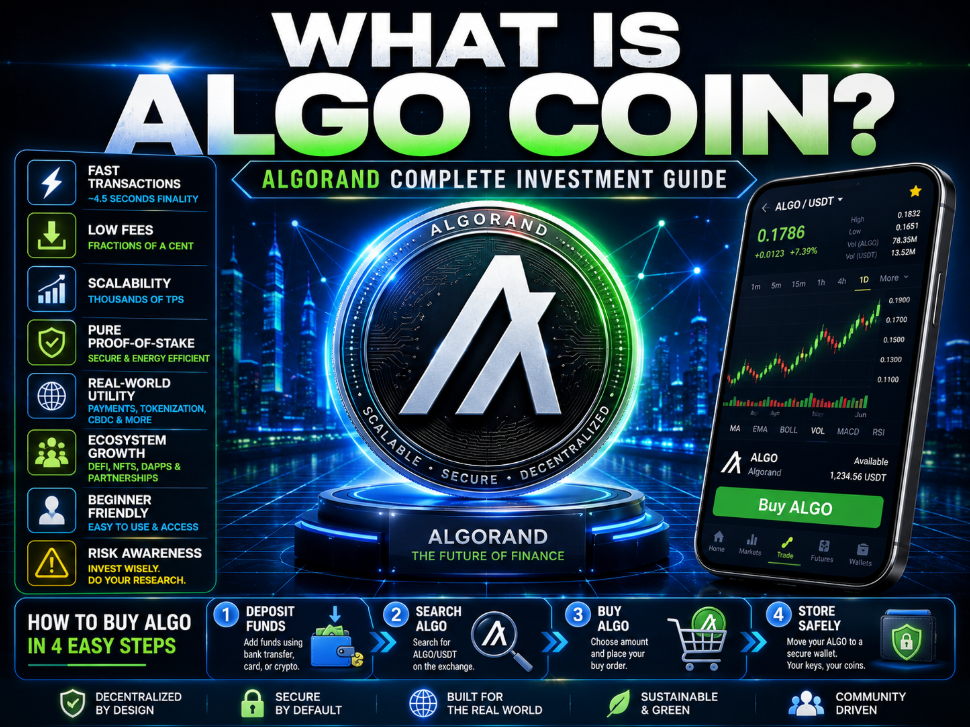
ALGO is the native token of the Algorand blockchain.
Algorand is a Layer 1 public blockchain built for high performance, low transaction fees, near-instant transaction finality, and institutional-grade use cases. Simply put, it competes in the foundational public blockchain sector alongside networks like Bitcoin, Ethereum, Solana, Avalanche, and Sui.
However, what sets Algorand apart from many other networks is its distinctly "academic" origin story.
1. A blockchain founded by a Turing Award winner: What makes it different?
Algorand was founded by Silvio Micali.
Silvio Micali is a Professor of Computer Science at the Massachusetts Institute of Technology (MIT) and a recipient of the 2012 Turing Award (often considered the "Nobel Prize of computing"). His lifelong research focuses on cryptography, zero-knowledge proofs, Byzantine agreement protocols, and secure multi-party computation—the very pillars that form the foundation of blockchain technology.
Consequently, Algorand was not a marketing-driven venture from inception; it was built as a rigorous academic and engineering project.
This unique background grants Algorand several advantages:
- The project’s founder commands immense authority in the cryptographic field.
- The technical architecture is not a derivative clone of other public chains; the consensus protocol was engineered completely from first principles.
- It commands higher baseline trust among institutions, academic circles, and enterprise developers.
- It is uniquely positioned for serious evaluation in discussions concerning Central Bank Digital Currencies (CBDCs), Real World Assets (RWAs), and institutional payment rails.
- The project’s narrative centers on long-term infrastructure rather than short-lived speculative trends.
However, this academic focus presents a distinct challenge: highly technical engineering projects often lag behind "marketing-heavy public chains" in retail user acquisition, community sentiment engineering, and rapid ecosystem capital deployment.
This represents the central paradox of ALGO: its technical credibility is top-tier, yet its market price performance has historically remained muted.
2. ALGO, BTC, and ETH are all Layer 1s, but their positionings are completely distinct
Newcomers often ask: If they are all base-layer public blockchains, what separates ALGO from Bitcoin and Ethereum?
You can conceptualize their core identities like this:
Bitcoin functions primarily as a decentralized store of value. It prioritizes absolute scarcity, foundational security, censorship resistance, and deep global consensus. BTC does not optimize for a complex application ecosystem; it serves as "digital gold."
Ethereum acts as the premier programmable smart contract platform. It serves as the primary settlement layer for a massive application ecosystem spanning DeFi, NFTs, RWAs, Layer 2 networks, stablecoins, and DAOs, commanding the deepest on-chain liquidity in Web3.
Algorand positions itself as a "high-performance, institutional-grade Layer 1." It was engineered to solve a specific enterprise challenge: delivering near-instant transaction finality, fractions-of-a-cent execution costs, and continuous network uptime. This makes it structurally optimized for high-volume retail payments, regulated asset issuance, real-world asset tokenization, central bank digital currency testing, and enterprise backend architectures.
Therefore, ALGO is not a direct substitute for BTC, nor is it a simple "Ethereum killer." It carves out its own niche within the Layer 1 ecosystem as a highly secure, stable financial infrastructure rail.
3. Why is Algorand classified as an "institutional-grade blockchain"?
Several core technical characteristics earn Algorand its reputation as an institutional-grade network:
- Immediate Finality: On many blockchain networks, a block must be followed by several subsequent blocks before the risk of a chain reorganization (rollback) is statistically mitigated. Algorand features immediate finality; once a transaction is verified in a block, it is written permanently. Financial institutions require settlement certainty; they cannot route real-world capital through a network where a finalized transaction could theoretically be rolled back minutes later.
- Negligible Transaction Fees: Algorand’s standard transaction fee is remarkably low, hardcoded at a base rate of roughly 0.001 ALGO per transaction. Evaluated against 2026 ALGO market values, a standard transfer costs a fraction of a penny, making the network ideal for high-frequency micro-payments, automated settlements, and high-density on-chain updates.
- Continuous Protocol Uptime: For enterprise deployment, raw theoretical Transactions Per Second (TPS) metrics matter less than constant network availability. Algorand prioritizes structural network uptime and stability as core selling points, avoiding the frequent halts or severe network congestion that have impacted other high-throughput chains.
- Algorand Standard Assets (ASAs): The ASA framework enables developers or enterprises to issue stablecoins, loyalty points, fractionalized equity, NFTs, or tokenized RWAs natively at the protocol layer. This eliminates the complete reliance on complex, custom-written smart contracts for basic token minting, reducing security vulnerabilities and streamlining smart contract auditing for institutional compliance departments.
4. Total supply of 10 billion: What does a near-fully circulating supply imply?
The maximum hard cap of ALGO is set at 10 billion tokens. By 2026, public market aggregators show that the circulating supply has climbed past 9 billion tokens, nearing its absolute ceiling.
This reality impacts future price dynamics in two key ways:
- Visible Dilution Risk: Unlike newly launched ecosystems that carry aggressive, multi-year token unlock schedules, ALGO has already absorbed the vast majority of its structural supply distribution. While remaining unlocks must still be tracked, the risk of massive, unexpected supply-side dilution is substantially lower.
- Demand-Driven Price Discovery: When an ecosystem features a low initial circulating supply, early price action can easily be engineered upward due to a thin order book. Because ALGO is highly circulating, sustainable upward price trends require authentic demand drivers rather than artificial scarcity stories. Real price growth will rely on active on-chain transaction metrics, RWA/CBDC execution, developer activity, expanding DeFi TVL, institutional capital deployment, and broader macro market support.
5. What are the roles of the Algorand Foundation and Algorand Inc.?
Newcomers frequently mistake the Algorand Foundation and Algorand Inc. for the same entity. They operate on distinct tracks:
Algorand Inc. is the underlying technology corporation. It was originally responsible for the core research, protocol cryptography, and fundamental engineering builds of the Algorand blockchain. Founded by Silvio Micali, this commercial entity drives the deep technical roadmap of the protocol.
The Algorand Foundation functions as an eco-centric, non-profit organization. Its charter is to steward ecosystem expansion, coordinate developer grants, manage decentralized governance frameworks, cultivate global community initiatives, and expand enterprise integration.
This dual-entity structure provides clear advantages: it allows for a clean division of labor between pure cryptographic research and market-side ecosystem scaling, prevents the network from relying entirely on a single commercial business entity, and aligns the project more closely with open-source development models.
However, it also introduces operational challenges, such as complex decision-making processes and brand dilution where onlookers struggle to differentiate responsibilities. If the foundation's developer incentives pivot inconsistently, it can temporarily dent ecosystem confidence even if the underlying technology functions flawlessly.
II. What Exactly is the PPoS Consensus Mechanism?
The defining technical differentiator of the Algorand blockchain is its co-called Pure Proof-of-Stake (PPoS) consensus architecture.
When regular investors hear "PoS," they often assume it is identical to standard staking models used by other layer-1 networks. The core breakthrough of Algorand lies in the word "Pure."
1. Where does the "purity" of PPoS manifest?
In conventional Proof-of-Stake or Delegated Proof-of-Stake (DPoS) systems, users are typically required to explicitly lock up (bond) their tokens for long cooling-off periods to act as validators or delegate their voting weight to third-party node operators. Furthermore, if a validator acts maliciously or experiences a hardware malfunction, the network may impose slashing penalties—permanently confiscating a portion of the locked capital.
Algorand's architectural logic is fundamentally different.
On Algorand, participating in network consensus does not require everyday users to lock up massive amounts of capital or surrender liquidity for extended intervals. Any eligible ALGO holder can participate in securing the network natively from their own wallet using participation keys. The protocol employs a verifiable random function (VRF) to dynamically, secretly, and randomly select which nodes propose and vote on the next block.
Think of it through this simple real estate analogy:
- Standard PoS networks operate like a rental security deposit—you must surrender liquidity upfront to gain access rights. If you want out, you face lockup wait times, and mistakes can result in your deposit being docked (slashed).
- Algorand’s PPoS functions like a light switch—simply holding the asset qualifies you to secure the network. It requires far less infrastructure overhead, removes slashing anxiety, and preserves absolute capital liquidity.
For everyday users, this means entry barriers are minimal, liquidity is never locked away in a contract, and consensus security is decentralized across a vast array of holders rather than concentrated inside a small cabal of enterprise validation cartels.
However, this design introduces a structural economic debate: if participating in consensus does not carry mandatory staking lockups or severe slashing penalties, designing a highly compelling, sustainable native yield incentive structure for node runners becomes a complex task—a factor that ultimately led to the development of the economic upgrades under Project King Safety.
2. Solving the Blockchain Trilemma
The Blockchain Trilemma states that a decentralized ledger can realistically optimize for only two of three key properties simultaneously:
- Decentralization
- Security
- Scalability
For instance, Bitcoin maximizes security and decentralization but compromises on native transaction speed and execution throughput. Ethereum prioritizes decentralized security but faces base-layer network congestion and high execution costs during peak demand, relying on an ecosystem of Layer 2 rollups to achieve true scale. Conversely, several high-throughput layer-1 networks deliver lightning-fast transaction metrics but face persistent criticisms regarding centralized validator node requirements or intermittent network halts.
Algorand was engineered to tackle all three prongs directly at the Layer 1 level using its PPoS framework, secret random node selection, Byzantine agreement protocols, and instant block finality.
The core engineering strategy is straightforward:
- Eliminate computationally intensive proof-of-work mining to lower energy consumption and hardware barriers.
- Prevent a static, elite group of validators from permanently controlling block production rights.
- Utilize cryptographic randomness to ensure attackers cannot predict which node to target ahead of time.
- Achieve high block throughput and low latency via streamlined consensus steps.
- Incorporate instant finality to eliminate transaction rollbacks.
This forms the bedrock of Algorand’s technical value proposition: rather than building a congested Layer 1 network and patching it later with Layer 2 offshoots, Algorand designed its base layer to manage scale from day one.
3. The practical utility of low fees and instant finality
Algorand's standard network transaction fee is hardcoded at 0.001 ALGO. For an everyday user, this structural feature provides immediate practical benefits:
- Micro-transactions are never eaten away by high execution overhead.
- High-frequency on-chain interactions remain extremely cost-effective.
- Stablecoin settlement becomes viable for routine, real-world retail payments.
- Enterprises can execute massive corporate batch settlements with predictable expenses.
- Developers can architect complex dApps without forcing users to manage unpredictable Gas markets.
This stands in stark contrast to legacy smart contract environments. On the Ethereum mainnet, a sudden wave of on-chain trading can drive single transaction fees up to tens or hundreds of dollars. While large capital allocators can absorb these costs, they are structurally prohibitive for everyday micro-payments, casual Web3 gaming, social dApps, supply chain logging, and corporate record keeping.
Algorand's ultra-low fee structure paired with sub-four-second transaction confirmation makes it naturally optimized for retail payment rails, cross-border remittance, automated AI Agent business flows, digital ticketing, and institutional RWA asset registries.
4. What does quantum resistance mean for investors?
In recent years, the Algorand technical team has consistently emphasized its focus on quantum-safe cryptography, post-quantum security standards, and State Proofs.
For the average retail investor, quantum computing can feel like a distant, abstract concept. The threat of quantum computing breaking mainstream asymmetric encryption algorithms is not a pressing reality today or tomorrow.
However, its long-term strategic value is significant:
- Blockchains function as immutable, permanent historical ledgers.
- Assets and data recorded on-chain today must remain secure decades into the future.
- If quantum computing capabilities advance faster than general market projections, networks engineered with post-quantum security baselines from the start will command a massive structural advantage.
- For conservative enterprise institutions and central banks, multi-decade security assurance is a strict requirement, not an optional feature.
Quantum resistance may not serve as a short-term retail hype catalyst, but it functions as a critical trust element for multi-decade enterprise implementation.
5. Why the ASA standard is optimized for stablecoins, CBDCs, and RWAs
Algorand Standard Assets (ASAs) provide a streamlined, native asset tokenization framework directly inside the blockchain’s base layer.
To conceptualize this, contrast it with Ethereum's popular ERC-20 standard: on Ethereum, creating a token requires deploying a custom-written smart contract that holds the asset logic. On Algorand, token creation utilizes an engineered asset standard hardcoded directly into the layer-1 protocol itself.
The ASA standard seamlessly supports:
- Fiat-pegged stablecoins
- Loyalty and reward ecosystems
- In-game digital assets and collectibles
- Fractionalized real estate equities
- Corporate bonds and debt instruments
- Supply chain compliance receipts
- Central Bank Digital Currency (CBDC) pilot assets
The core benefits of the native ASA model include simplified asset deployment, uniform base-layer security profiles, ultra-low execution overhead, and structural optimization for regulatory compliance rules (such as asset clawback or transfer restrictions). For conservative financial institutions, an asset issuance framework that is simple, secure, and easily auditable is far more attractive than navigating the complexities of custom smart contract deployments.
6. The strategic role of AlgoKit and developer onboarding
A public blockchain’s long-term survival does not rely on its academic pedigree or whitepapers; it depends entirely on attracting active developers to build useful products on its rails.
Algorand has focused heavily on dismantling technical barriers to entry. The release of AlgoKit enables traditional software engineers to build decentralized applications using standard, globally adopted programming languages like Python and TypeScript. For mainstream Web2 developers, this approach is far more accessible than learning highly specialized, custom Web3 languages or navigating unfamiliar, low-level cryptographic programming environments.
If a blockchain requires a highly specialized cryptographic developer skillset to build a simple application, its ecosystem expansion will remain bottlenecked. By opening the development pipeline to mainstream engineers using standard Web2 languages, Algorand expands its reach to fintech platforms, payment startups, RWA syndicates, data analytics providers, and automated AI Agent architectures.
To compare Algorand's base-layer scaling philosophy against Ethereum's rollup-centric roadmap, you can review our horizontal structural analysis in the 2030 Ethereum (ETH) Price Prediction.
III. Where is ALGO Deployed in the Real World?
Elite technology requires real-world deployment to sustain long-term token value. Algorand’s real-world footprint is heavily focused across several institutional sectors: RWA tokenization, payment rails, central bank digital currency research, and agentic Web3 commerce.
1. Why RWA and CBDC frameworks gravitate toward Algorand
Real World Asset (RWA) tokenization stands as a primary structural narrative within the digital asset industry. The fundamental objective is to map physical and traditional financial assets onto a distributed ledger to enable round-the-clock fractional ownership, instant clearing, transparent tracking, and automated composability.
These tokenized assets span a wide range of markets:
Financial syndicates deploying RWAs enforce strict requirements on their underlying ledger layer: execution costs must remain low and predictable, block confirmation must be swift and final, network uptime must be absolute, and the token layer must seamlessly support compliance rules. Algorand's core architecture lines up directly with these operational criteria.
Similarly, Central Bank Digital Currency (CBDC) initiatives require these exact operational parameters. While central banks frequently favor private permissioned deployments or customized state-run architectures over public mainnets, Algorand's academic pedigree and cryptographic framework regularly place its technology under evaluation for state-sponsored pilot initiatives.
An Important Distinction for Investors: Central bank technology consultations, technical whitepapers, and pilot testbeds do not automatically translate into direct transaction volume or structural demand for the public ALGO token. If a nation adopts Algorand's codebase but deploys it within an isolated, private permissioned architecture, the value capture for the public utility token may be negligible. True value accrual occurs only when applications route transactions directly through the public Algorand mainnet, thereby consuming ALGO for network gas fees and locking liquidity on-chain.
2. The implications of the Google Agent Payments Protocol integration
Algorand's inclusion in ecosystem discussions surrounding the Google Agent Payments Protocol highlighted a compelling new growth avenue. The core significance of this integration does not stem from corporate treasury accumulation, but from a structural technical alignment: Algorand's rapid finality and low fee structure are highly optimized for automated, high-frequency AI Agent micro-transactions.
Agentic commerce features a distinct set of operational demands:
- Individual transaction sizes are frequently tiny (micro-cents).
- Transaction frequency can scale to immense densities per minute.
- Settlements require near-instantaneous validation.
- Network gas overhead must remain trivial for business models to stay viable.
- Processes must be cryptographically verifiable without manual human oversight.
Imagine a future where an autonomous AI Agent routinely purchases API compute blocks, pays for targeted data indexing, rents server space, manages software subscriptions, and executes micro-settlements for modular services behind the scenes. If a network’s transaction fee costs dollars or fluctuates unpredictably, these automated micro-payment economies become economically unviable. Algorand’s predictable, fraction-of-a-cent gas model gives it a strong foundation in this emerging agentic commerce landscape.
3. Do mainstream sports and entertainment partnerships impact token price?
Algorand has historically executed high-profile global sponsorships with organizations like FIFA. While these arrangements drive significant mainstream brand exposure, their utility must be evaluated objectively.
Their value manifests primarily in raising global brand familiarity, building institutional credibility, and demonstrating the network's capacity to handle massive consumer-facing digital ticketing or NFT collections.
However, from a pure investment perspective, branding events do not automatically guarantee upward price momentum. Sustainable token appreciation requires a clear economic transmission mechanism: the partnership must generate consistent, high-volume on-chain transactions, incentivize long-term user retention, increase network fee consumption, and foster real dApp ecosystem expansion. If a partnership functions purely as a marketing display without driving active mainnet utilization, its contribution to ALGO's structural value remains limited.
4. Evaluating the state of Algorand's native DeFi ecosystem
When analyzing any public blockchain, it is critical to evaluate its data transparently: Algorand’s native decentralized finance (DeFi) footprint is currently modest.
Data from on-chain tracking platforms like DeFiLlama shows that Algorand’s Total Value Locked (TVL) lags significantly behind sector leaders. Ecosystems like Ethereum, Solana, BNB Chain, Arbitrum, Base, and Sui command far deeper capital reserves, more robust daily trading volumes, higher developer mindshare, and a larger variety of active protocols.
This reality exerts ongoing pressure on ALGO's market valuation. The long-term valuation of a Layer 1 network cannot rely solely on its elegant consensus math; it requires a thriving application ecosystem. Users and capital allocate to networks that offer deep liquidity pools, diverse financial applications, optimized yield opportunities, and vibrant trading communities. Algorand’s primary historical hurdle has been converting its technical design advantages into a dominant, highly liquid ecosystem—a factor that directly explains its extended price consolidation.
5. The transmission pipeline: From developer growth to token value
When developer tooling expansions—like native Python integration and AlgoKit—succeed in onboarding new engineers, the value transmission to the ALGO token follows a specific fundamental pathway:
[Lower Onboarding Barriers] ➔ [Increased Developer Inflows] ➔ [Expanding App Deployment] ➔ [Organic User Acquisition] ➔ [Surging Transaction Volume] ➔ [ALGO Fee Consumption & Liquidity Lockups] ➔ [Market Re-Rating]
This structural pipeline takes time to materialize and faces intense competitive pressures at every stage, but it remains the most reliable fundamental framework for assessing the long-term viability of a base-layer public blockchain.
IV. ALGO’s Historical Price Action: Evaluating the Extended Retracement
The long-term price chart for ALGO shows a severe correction. While precise all-time high metrics vary slightly across index aggregators—with some charting peaks above $3.00 and others focusing on the $2.00+ range during the 2021 bull market cycle—ALGO's consolidation near the $0.09 range by 2026 represents a retracement of over 95% from its peak. This is not a standard market correction; it is a deep, multi-year cyclical devaluation.
1. What structural factors drove ALGO's correction to the $0.09 range?
ALGO’s extended price decline was driven by a combination of macro and project-specific pressures:
- The Macro Crypto Bear Market: The aggressive transition from 2021 bull market liquidity to the strict macro tightening of the subsequent bear cycle hit alternative Layer 1 protocols particularly hard. Valuations that expanded rapidly on speculative tech promises contracted just as fast as capital fled back to safety.
- Aggressive Early Valuations: During the 2021 cycle, alternative layer-1 chains were priced at a significant premium based on assumptions of capturing major market share from Ethereum. When organic user adoption, TVL, and fee generation failed to match these multi-billion-dollar speculative valuations, a steep market correction followed.
- Intense Sector Competition: The continuous launch and scaling of competitive networks (Solana, Avalanche, Polygon, and later Move-ecosystem chains like Sui and Aptos, alongside Layer 2 networks like Base) split developer mindshare and thinned out available venture capital.
- Early Supply Distribution Models: Algorand’s initial token distribution mechanics and early structured selling schedules generated persistent structural supply-side pressure over an extended period. When demand velocity slowed, this continuous token emission weighed on spot market prices.
- Modest Ecosystem Network Effects: As liquidity pools concentrated within a few dominant networks post-2022, Algorand's lack of a breakout consumer or DeFi application prevented it from generating the organic on-chain buying volume needed to absorb circulating market supply.
2. Is a 95%+ correction unprecedented in digital asset markets?
In traditional equity or blue-chip stock markets, a 95% value collapse is rare and often points to terminal structural failure or impending bankruptcy.
However, within the alternative digital asset and early-stage public blockchain sectors, corrections of this scale are a regular feature of deep market cycles. Numerous legacy layer-1 chains, prominent DeFi protocols, and Web3 infrastructure assets have navigated identical 80% to 95%+ devaluations, with many consolidating for years before finding a cyclical floor.
This reality underscores two core market principles:
- Bull market valuations are heavily inflated by speculative bubbles that pull years of theoretical future growth into current prices.
- Deep structural discounts do not automatically guarantee an asset is undervalued. A 95% drop can signal an attractive entry point, but it can also indicate that the market has repriced the network based on slower-than-expected long-term growth. The critical question for investors is whether the project possesses a viable, authentic path to renewed structural growth.
3. Analyzing the 2025 relief rally and subsequent pullback
During the 2025 trading year, ALGO experienced a strong relief rally, reclaiming higher local price targets before retracing back down to its baseline $0.09–$0.11 liquidity pocket.
This temporary rally was largely driven by a brief macro altcoin rotation, renewed attention on institutional RWA frameworks, technical developer updates regarding native Python onboarding, and speculative capital hunting for deeply discounted legacy layer-1 assets. The subsequent price retracement, however, confirmed that the upward move was not supported by a sustained expansion in core on-chain metrics or sticky capital inflows. It serves as a reminder that alternative layer-1 assets can experience sharp, sentiment-driven rallies, but sustaining those gains requires authentic growth in on-chain activity.
4. Evaluating ALGO through the lens of Bitcoin Halving Cycles
As an alternative public chain asset, ALGO is highly sensitive to the overarching liquidity waves dictated by Bitcoin's halving cycles. Historically, crypto market capital flows follow a structured path:
[Bitcoin Liquidity Expansion] ➔ [Ethereum Capital Rotation] ➔ [Major Layer 1 & Large-Cap Infrastructure] ➔ [Mid-to-Small Cap Altcoin Sectors (DeFi, RWA, Meme Layers)]
ALGO rarely experiences a sustained, independent breakout during the initial stages of a Bitcoin-led market expansion. Instead, it typically acts as a late-stage beneficiary when capital rotates down the risk curve into established, deeply discounted alternative public chains. Consequently, timing an entry into ALGO requires assessing more than just its standalone charts; you must evaluate whether macro market conditions support broad altcoin capital rotation.
5. The $0.09 zone: Technical floor or a falling knife?
From a technical charting perspective, the $0.08–$0.10 liquidity pocket represents a historical baseline support zone for ALGO. However, historical price supports are not absolute guarantees of future price floors.
- If the token continues to consolidate flatly at these lower thresholds while core on-chain data (TVL, active wallets, fee revenue) remains stagnant, the asset is simply cheap rather than structurally undervalued.
- Conversely, if the token consolidates within this price range while underlying network metrics—such as developer onboarding, tokenized RWA deployments, institutional pilots, and stablecoin transactions—show a measurable upward trend, this zone represents a classic fundamental accumulation pocket.
V. 2026–2030 ALGO Price Prediction: Navigating Multi-Scenario Models
Long-term price projections for ALGO vary significantly across analytical desks. Conservative algorithmic models project the token will remain bound within a tight $0.10 to $0.30 channel out to 2030, citing competitive pressures. Meanwhile, optimistic structural models suggest that if the network captures a meaningful share of the global RWA tokenization market, resolves its node incentive structures, and rides a major macro altcoin expansion, it could realistically re-target the $1.00 to $3.00+ range.
The wide divergence between these models stems directly from how they weight core fundamental variables.
1. The Logic Behind Conservative Institutional Models
Conservative forecasting frameworks rely heavily on historical price trends, current transactional volumes, and active user acquisition data. Their models are built on several key assumptions:
- ALGO's multi-year downward market structure requires significant capital to completely reverse.
- The current gap in DeFi TVL between Algorand and market leaders presents a steep competitive hurdle.
- Market attention remains heavily consolidated within newer public chain networks.
- A low nominal unit price is often a reflection of lower aggregate demand rather than structural market inefficiency.
- Technical execution does not automatically translate into spot market buying pressure.
Consequently, these models project a slow, measured valuation recovery, forecasting targets between $0.09 and $0.20 for the near term and capping long-term 2030 targets between $0.20 and $0.70. The strength of this approach is its caution, protecting capital from speculative narratives, though it risks underestimating the price elasticity of alternative assets during broad bull market expansions.
2. The Logic Behind Optimistic Structural Models
Optimistic forecasting models place higher weight on architectural design, founding pedigree, and long-term sector growth. Their assumptions include:
- Algorand’s core protocol features top-tier security and decentralization characteristics.
- The network’s institutional-grade performance profiles are structurally optimized for high-value financial compliance use cases.
- Real-World Asset (RWA) tokenization represents a massive addressable market heading toward 2030.
- As the circulating supply approaches its absolute 100% hard cap, structural supply-side pressure diminishes.
- A clear reversal in on-chain fundamentals can trigger a rapid, multi-stage market re-rating.
These models suggest potential long-term targets of $3.00, $5.00, or higher by 2030. However, these targets are conditional on several milestones being hit simultaneously: the wholesale adoption of the network by major financial institutions, a significant expansion in on-chain TVL, sustainable developer growth, and strong macro bull market conditions.
3. Can Project King Safety alter ALGO's structural demand?
Project King Safety represents a critical evolution in Algorand’s long-term tokenomics and security architecture. The initiative was launched to directly address a key economic debate within the ecosystem: building a sustainable, long-term economic model for validation nodes and consensus participants without relying on permanent, artificial subsidies from the Foundation's treasury.
The upgraded model explores several native incentive channels:
- Direct transaction fee redistribution mechanisms.
- Optimized Maximum Extractable Value (MEV) capture frameworks.
- Sustainable validator reward emissions structures.
- Lower operational overhead requirements for running non-relay validation hardware.
If successfully implemented, Project King Safety can improve ALGO's market dynamics in three ways:
- Strengthen Network Decentralization: Offering clear economic incentives encourages a wider array of independent operators to run nodes, reducing structural reliance on the Foundation.
- Incentivize Long-Term Holding: Transforming the asset into a direct yield-bearing security participant encourages long-term token accumulation among retail and institutional holders.
- Enhance Token Utility: It expands ALGO's role from a basic governance and gas token into a core economic yield asset for securing the network.
The primary risk is execution balance: if the incentive structure relies too heavily on structural token emissions, it can increase circulating supply pressure; conversely, if the economic rewards are too low, node participation will fail to expand.
4. Four Crucial Variables Driving ALGO's 2030 Horizon
- Variable 1: Enterprise RWA and Payment Conversion. The critical metric is whether pilot programs and technical consultations translate into live, high-volume transactions on the public mainnet, driving consistent transaction fee consumption.
- Variable 2: Layer 1 Market Share Dynamics. Algorand's long-term valuation is tied directly to its ability to defend its market share and claw back developer mindshare from dominant smart contract networks.
- Variable 3: Macro Liquidity Windows. Alternative assets rely heavily on expansive macro liquidity environments. If global markets enter extended tightening or risk-off phases, alternative layer-1 valuations will remain constrained.
- Variable 4: Broad RWA Asset Class Expansion. If the tokenization of traditional financial instruments scales globally, capital will favor secure, compliant layer-1 infrastructure. If this trend materializes, Algorand is well-positioned to capture interest.
5. Multi-Scenario Projections for ALGO (2026–2030)
2026 Projections
- Bear Case (~$0.05): Macro conditions tighten significantly, alternative assets face broad sell-offs, and ALGO breaks below long-term technical supports due to slow on-chain traction.
- Base Case (~$0.20): Spot market prices stabilize as macro conditions settle. Algorand’s technical updates and Python developer push drive a steady valuation recovery back toward its baseline average.
- Bull Case (~$0.80): A strong macro risk-on cycle takes hold. Capital rotates aggressively into alternative layer-1 networks, and a major institutional partnership or RWA milestone triggers an accelerated short-term re-rating.
2027 Projections
- Bear Case (~$0.08): On-chain data remains stagnant, keeping the asset pinned within a compressed, low-interest liquidity range.
- Base Case (~$0.50): The RWA tokenization sector begins to scale globally. Algorand captures a steady pipeline of institutional deployments, driving a recovery into mid-range technical zones.
- Bull Case (~$1.50): Algorand re-enters mainstream public chain discussions, backed by a significant expansion in mainnet transaction volume and sticky institutional inflows.
2028 Projections
- Bear Case (~$0.12): Post-halving market dynamics fail to trigger a broad altcoin rotation, leaving the token in a modest, inflation-adjusting recovery track.
- Base Case (~$1.20): Aligning with historical market cycles, late-stage capital rotates down the risk curve, lifting established, deeply discounted layer-1 chains like ALGO.
- Bull Case (~$3.00): The network approaches its historical peak valuation range, driven by a simultaneous breakout across DeFi TVL, enterprise payment pipelines, and real-world asset issuance.
2029 Projections
- Bear Case (~$0.18): The token captures a technical valuation premium but lacks the broad ecosystem network effects required to command speculative premiums.
- Base Case (~$2.50): Institutional infrastructure deployment expands, and Algorand establishes itself as a reliable layer-1 settlement network for regulated digital assets.
- Bull Case (~$4.50): Strong macro bull conditions align with deep network adoption, positioning ALGO as a premier institutional asset within the layer-1 sector.
2030 Projections
- Bear Case (~$0.25): The network remains operational and stable, but fails to achieve breakout retail or enterprise adoption, keeping its market cap limited.
- Base Case (~$3.50): Technical advantages are successfully converted into steady transaction volume and enterprise adoption, returning ALGO to a prominent position within the layer-1 landscape.
- Bull Case (~$6.50): A best-case macro super-cycle scenario: the RWA tokenization market reaches multi-trillion-dollar scale, Algorand secures deep institutional integration, and global liquidity drives aggressive re-ratings across established public networks.
VI. Is ALGO a Buy Right Now? Balancing Catalysts and Risks
Deciding whether to allocate capital to ALGO requires an objective assessment of both its core growth catalysts and its structural risks.
Five Structural Catalysts for ALGO
- Top-Tier Cryptographic Pedigree: The project's founding team and deep roots in MIT's cryptographic research labs provide a level of structural credibility that appeals to institutions, enterprise developers, and compliance departments.
- Historically Compressed Valuation: Trading near historical baseline supports means much of the speculative premium has been wrung out of the token, offering a structurally asymmetric entry point if fundamentals reverse.
- Alignment with the Macro RWA Narrative: The protocol's technical features—such as instant finality and native asset standards—line up directly with the operational needs of the expanding real-world asset tokenization sector.
- Liquidity-Friendly Consensus Model: The PPoS consensus framework allows holders to secure the network natively from their own wallets without surrendering asset liquidity or navigating complex slashing risks.
- Asymmetric Growth Potential: Its current market cap relative to sector leaders means that if the network successfully scales its on-chain utility, the asset has significant room for structural upside.
Five Structural Risks to Consider
- Modest Ecosystem On-Chain Inflows: The network's current DeFi footprint and TVL metrics are small relative to its technical capabilities, meaning it has yet to build dominant on-chain network effects.
- An Unforgiving Layer 1 Competitive Landscape: The protocol faces intense competition for developer mindshare and capital from established ecosystems like Ethereum and Solana, as well as high-growth modular networks.
- The Threat of Feature Parity: While Algorand's low fees and fast finality were highly unique at launch, numerous contemporary networks now deliver comparable throughput and cost profiles, reducing its technical moat.
- The Nominal Unit Price Misconception: Newcomers often mistake a low nominal unit price for automatic upside, ignoring the critical roles of circulating market capitalization and aggregate token demand velocity.
- Ecosystem Liquidity Risks: Alternative public chain assets outside the top market tier routinely face thinner order books and lower aggregate attention during risk-off macro cycles, exposing positions to sharper sentiment swings.
To calibrate your overall portfolio risk expectations against broader market conditions, you can review our cyclical market analysis in Is it a Good Time to Buy Bitcoin Now?.
VII. Step-by-Step Tutorial: How to Safely Buy ALGO on HiBT
If you have completed your fundamental research and decided to execute a small position allocation, your priority shifts to operational safety. Navigating order entries, matching deposit networks, and validating address fields correctly prevents costly operational mistakes.
1. Why consider HiBT for your ALGO transactions?
When deploying capital into alternative layer-1 digital assets, look for a platform that delivers solid liquidity, verified security architectures, clean compliance registrations, and streamlined user paths.
HiBT provides a dedicated, highly liquid spot trading corridor for the ALGO/USDT asset pair. Operational profiles emphasize international corporate registrations, active MSB designations within North American jurisdictions, and a security framework built on 90% offline cold wallet multi-signature architectures.
Key trading features on HiBT include:
- A direct, liquid spot marketplace for the ALGO/USDT pair.
- An intuitive trading layout matching industry standards.
- Straightforward search functionality to easily access targeted asset pairs.
- Full support for market execution and precision limit orders.
- The ability to use standard liquid USDT as your base quote currency.
Remember that retaining capital inside any centralized custodial platform exposes you to counterparty risk. For larger, long-term allocations, taking the time to learn self-custodial wallet management is a critical step in securing your assets.
2. The HiBT Onboarding Process
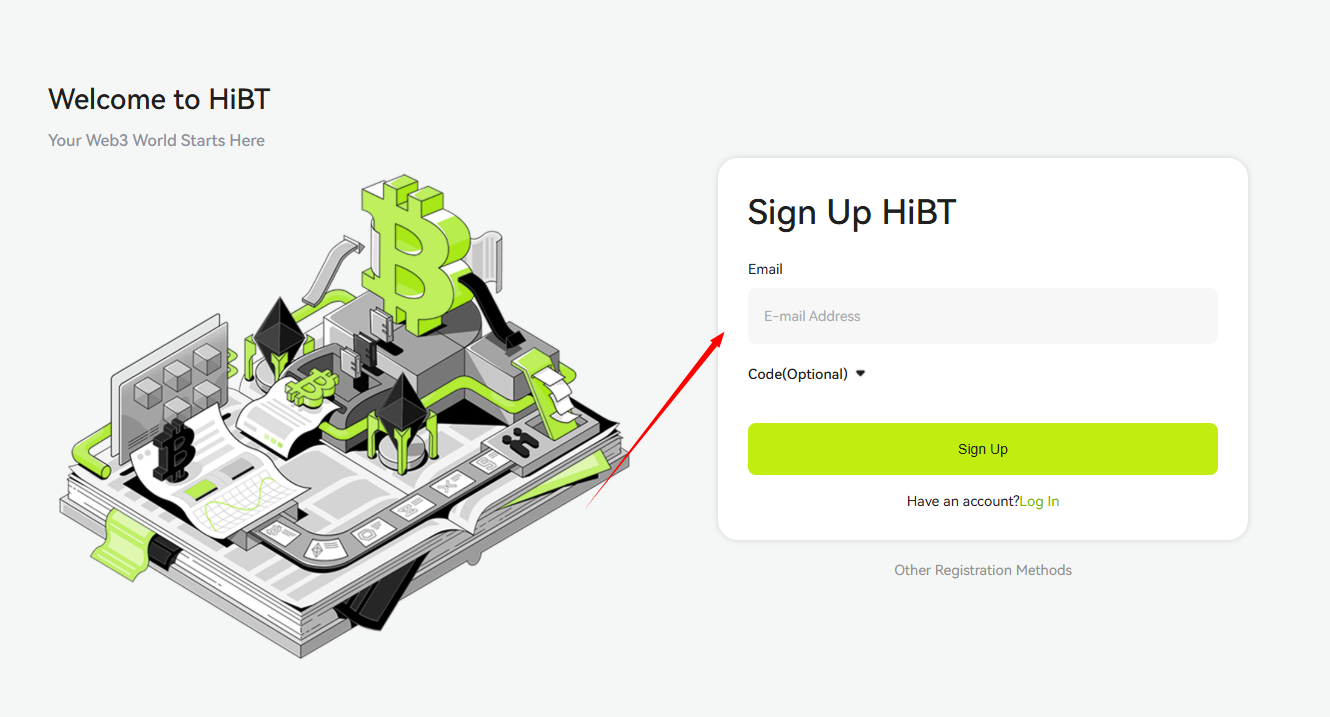
To establish your account credentials, follow these baseline steps:
- Navigate to the official HiBT platform portal or download the mobile app through verified distribution stores.
- Select the account registration panel.
- Initialize your profile using a verified email address or active mobile number.
- Construct an advanced, high-entropy password.
- Input the system-generated verification code to complete your basic account setup.
- Navigate directly to your security control panel to activate two-factor authentication (2FA) via Google Authenticator, establish an independent asset funding password, and configure unique anti-phishing codes.
3. Completing KYC Identity Verification
Centralized compliance structures require identity verification. To prepare for the KYC pipeline, ensure you have:
- A valid government-issued ID card, international passport, or regional driver's license.
- A clear smartphone camera for live facial recognition scanning.
- Verifiable details regarding your primary country or region of residence.
Verification Guidelines: Ensure all uploaded documentation is completely legible, free from artificial glare, and displays all border lines clearly. Avoid using expired credentials or relying on third-party verification brokers.
4. Accessing Platform Welcome Rewards
If the exchange is hosting active promotional tracks or new user welcome tasks, details are typically highlighted via the primary app banner, deposit dashboard, or mission center. Standard incentives include spot fee discount credits, trading rebates, or asset allocation vouchers.
Always read the fine print before chasing promotional parameters: Verify the precise time windows allowed for completion, required net funding amounts, applicable asset pair boundaries, and specific rules regarding reward redemption or withdrawal limitations.
5. Selecting Funding Methods
Acquiring ALGO typically involves funding your account with USDT to swap for the asset.
Method A: Direct Fiat On-Ramps
If the platform supports native fiat integrations within your region, you can purchase USDT directly using supported bank wires, debit cards, or local payment channels. Review the comprehensive quote breakdown to confirm the fiat purchase amount, net USDT to be credited, processing fees, and expected processing times.
Method B: On-Chain Multi-Network Deposits
If transferring pre-existing USDT balances from an external Web3 wallet or alternative exchange platform, matching your selection to the correct blockchain network is critical. USDT moves across numerous layer-1 and layer-2 networks (ERC20, TRC20, BEP20, Arbitrum, Polygon). You must ensure absolute alignment across all three data points:
- The withdrawal chain selected at your external source wallet.
- The network choice checked on the HiBT deposit interface.
- The specific network configuration of the generated deposit address string.
[Source Wallet: TRC20] ➔ [HiBT Deposit Choice: TRC20] ➔ [Address Match Verified] = Safe Transfer
If a network mismatch occurs, your digital assets will be permanently lost on the ledger. Always process a small test transfer (e.g., 5-10 USDT) to confirm successful processing before routing your full balance.
6. Executing Your ALGO Order on HiBT
With a clear USDT balance now loaded in your spot wallet, you are ready to complete your purchase:
- Enter the Spot Market Desk: Head directly to the main trading interface and select the spot market module.
- Locate the Trading Pair: Type "ALGO" into the asset search bar and select the official ALGO/USDT spot trading corridor.
- Assess the Order Entry Module: Review the layout displaying the live candlestick chart, the real-time order book depth, recent historical transaction logs, and the order execution interface.
- Choose Your Execution Order Type:
- Market Order: Instantly fills your order at the best available price in the live order book. This is the simplest choice for smaller, exploratory positions where execution speed is favored over precise pricing.
- Limit Order: Allows you to define your exact maximum purchase price. The trade only executes if the market drops to your designated level, offering strict cost control.
- Define Your Position Size: Specify the exact volume of USDT you wish to deploy or the net quantity of ALGO you want to secure. Double-check your values to ensure all decimal placements and totals are correct.
- Confirm and Execute: Click the Buy button. You can track your order status through the Open Orders or Transaction History logs at the bottom of your workspace.
7. Setting Up Structured Accumulation Zones
Rather than deploying your full capital allocation into a single spot trade, a more disciplined approach is to scale into the position using a multi-tier entry strategy.
For example, if you plan to deploy 300 USDT, consider breaking the capital down into three equal tranches:
- Tranche 1: Execute a small market order at current prices to establish baseline exposure.
- Tranche 2: Position a limit order at key technical support levels to capture price pullbacks.
- Tranche 3: Retain a portion of capital to add to the position once the asset breaks above key resistance zones on clear trading volume.
This structured entry method protects your capital from short-term market peaks, lowers your overall cost basis, and keeps your strategy objective.
8. Post-Purchase Asset Custody: Exchange vs. Pera Wallet
Once your ALGO purchase completes, choose the right custody option for your investment horizon:
- Exchange Wallet Custody (HiBT): Keeps your assets readily accessible for fast trading, eliminates the overhead of managing personal cryptographic private keys, and simplifies short-term position management. However, it subjects your capital to platform counterparty risk.
- Self-Custodial Wallet Custody (e.g., Pera Wallet): Grants you full control over your cryptographic seed phrases, enables direct integration with native Algorand DeFi and governance applications, and removes platform counterparty risk. However, it places absolute security responsibility on you—if you lose your backup seed phrase, your assets cannot be recovered.
For modest, short-term positions, keeping your assets on the platform is common practice. As your position size grows and your investment timeline extends, learning to manage a self-custodial Web3 wallet is an important step in securing your digital assets.
9. Three Critical Operational Mistakes Beginners Must Avoid
- Network Addressing Blunders: ALGO operates on its own native layer-1 blockchain. Do not confuse native mainnet ALGO with wrapped derivatives running on Ethereum (ERC20) or BNB Chain (BEP20). Confirm that your receiving wallet supports native Algorand assets before executing a withdrawal.
- Depleting Your Wallet's Gas Reserves: While transaction costs on Algorand are exceptionally low, every on-chain interaction requires a fraction of ALGO to execute. If you withdraw your entire balance from your wallet, you can inadvertently strand your remaining assets. Always leave a few native tokens in your self-custodial wallet to cover future transaction fees.
- Omitting Critical Memo Fields: Certain centralized platforms require an explicit Memo or Destination Tag when depositing ALGO onto their platform. This tag enables the exchange's internal ledger to route the incoming deposit to your specific user profile. Omitting or entering this tag incorrectly will delay processing and put your assets at risk of permanent loss. Always execute a small test transaction to verify the pipeline before routing large balances.
VIII. Summary: Technical Layer 1 Moat or Legacy Academic Project?
To summarize ALGO in a single sentence:
ALGO is the native utility token of the institutional-grade Algorand Layer 1 blockchain, engineered to provide high-throughput, low-fee infrastructure optimized for real-world asset tokenization, automated payment rails, and institutional compliance architectures.
The Core Technical Trade-Off
Algorand possesses a robust cryptographic foundation, top-tier academic leadership, and an elegant consensus mechanism that delivers structural security, speed, and cost advantages. However, its primary historical challenge has been converting these technical design strengths into a highly liquid, dominant user ecosystem.
[Top-Tier Cryptographic Architecture] ✖ [Ecosystem Network Effects & Liquid Capital Inflows] = Long-Term Valuation Re-Rating
ALGO represents an established, highly secure layer-1 public blockchain asset that currently trades within a deeply discounted valuation range, making it a compelling option for investors who believe the network will successfully convert its technical foundation into real-world institutional adoption.
Final Operational Action Plan
- Analyze Market Capitalization Dynamics: Review ALGO’s live trading pairs to evaluate its circulating supply structure, current market capitalization, and volume distribution rather than focusing on its nominal unit cost alone.
- Audit Technical Ecosystem Progress: Review the active roadmap developments concerning Project King Safety node updates, AlgoKit Python tool adoption, and live enterprise RWA integrations to assess if the network's fundamental adoption is accelerating.
- Execute a Secure Test Transaction: If you choose to add ALGO to your portfolio, set up your profile on HiBT, complete basic verification, fund a small test amount of USDT, and run through a complete spot trade entry to familiarize yourself with the platform's operational flow.
A disciplined investment approach does not rely on predicting exact market bottoms; it is built on understanding exactly why you are entering an asset before you deploy capital, and maintaining clear exit parameters to manage your risk effectively.