
In the cryptocurrency market, many newcomers hearing about CRO for the first time usually do not hear it described as "digital gold" like Bitcoin, nor do they hear about it hosting a massive array of smart contract applications like Ethereum. Instead, it is typically introduced through keywords like Crypto.com, Cronos chain, exchange platform tokens, Visa card cashback, and staking privileges.
This is precisely what makes CRO so confusing for beginners.
Is it the platform token for Crypto.com? Or is it the native Gas token for the Cronos public chain? Is it a payment token or an ecosystem token? Does its current low price mean it is "cheap"? Is there a chance for it to return to its 2021 historical high by 2030?
This article will address the three questions that newcomers care about most:
- What exactly is CRO?
- Is CRO worth buying?
- If you want to buy it, how do you do so on HiBT?
Before we officially begin, a quick disclaimer: All price predictions in this article are analytical references based on public market data, project materials, on-chain ecosystems, industry cycles, and multi-scenario models. They do not constitute any financial or investment advice. Cryptocurrency is a highly volatile, high-risk asset, and any purchase should be made under the premise that you can afford to lose your capital.
I. What Exactly is the CRO Coin You Keep Hearing About?
When many people see CRO, their first reaction is: Is this the token for Crypto.com?
This understanding is correct, but incomplete.
To be more precise, CRO currently holds a dual identity:
- It is the core platform token within the Crypto.com ecosystem.
- It is the native asset of the Cronos ecosystem, used to pay for on-chain Gas, participate in DeFi, and connect the EVM application ecosystem.
Therefore, CRO is not a meme coin driven purely by narrative, nor is it an asset focused primarily on value storage like BTC. It resembles a hybrid of an "exchange platform token + public chain ecosystem token + payment application token."
1. What is the relationship between CRO and Crypto.com?
Crypto.com is a globally recognized crypto asset platform whose business spans trading, payments, wallets, debit cards, institutional services, and the Web3 ecosystem. CRO was initially designed to revolve entirely around this ecosystem.
Within the Crypto.com platform, CRO has historically served clear platform token utilities, such as:
- Staking to unlock platform tier privileges.
- Upgrading Visa card cashback levels.
- Participating in exclusive platform events.
- Reducing certain trading or service costs.
- Serving as a medium in Crypto.com Pay scenarios.
From this perspective, CRO shares similarities with exchange platform tokens like BNB, OKB, and GT. Its value is not derived solely from the token itself, but is tightly bound to the user base, trading volume, and ecosystem expansion capabilities of the platform behind it.
If Crypto.com continues to grow its user base across trading, payments, cards, and its on-chain ecosystem, the demand logic for CRO strengthens. Conversely, if platform growth stagnates, benefits decrease, or competitiveness drops, the value support for CRO will weaken.
2. What is the relationship between CRO and the Cronos chain?
Cronos is the critical public chain framework associated with the Crypto.com ecosystem. When discussing CRO today, one cannot simply view it as an exchange platform token; it must be evaluated within the context of the Cronos chain.
The Cronos ecosystem primarily includes:
- Cronos EVM: A public blockchain fully compatible with the Ethereum Virtual Machine.
- Cronos POS: A network optimized for payments, transfers, and staking scenarios.
- Cronos zkEVM: A Layer 2 scaling solution oriented toward higher performance and scalability.
For everyday users, the simplest analogy is this: just as you need ETH to pay for Gas when transferring assets, interacting with DeFi, or minting NFTs on Ethereum, you need CRO to pay for Gas when interacting with applications, transferring assets, or executing smart contracts on the Cronos chain.
This ensures that CRO has real, practical utility on-chain, rather than just sitting in an exchange waiting for price fluctuations.
3. Where does CRO sit in the broader crypto ecosystem?
If we categorize crypto assets into distinct layers, CRO sits squarely in the "platform-driven ecosystem asset" layer.
It is not a macro-asset like BTC, a universal smart contract infrastructure like ETH, a stablecoin like USDT or USDC, nor is it a community-sentiment-driven meme coin.
CRO is much closer to the following assets:
- BNB: Exchange platform utility + BNB Chain ecosystem token.
- OKB: Exchange platform privilege asset.
- GT: Gate.io ecosystem token.
- KCS: KuCoin platform utility token.
However, CRO has its own unique characteristics. Crypto.com invests heavily in payments, Visa cards, mainstream branding, sports sponsorships, and regulatory compliance. As a result, the narrative for CRO extends beyond "trading fee discounts" to encompass retail payment consumption, card cashback, on-chain Gas, and institutional treasury reserves.
This makes the growth potential for CRO more complex than a standard platform token—but it also introduces unique risks.
4. Total supply, the 70 billion burn, and the 2025 re-issuance: setting the record straight
Many outdated articles state that the total supply of CRO is 300 billion tokens.
This figure stems from Crypto.com's massive burn event in 2021. Originally, the total supply of CRO was 100 billion. The team announced a plan to burn 70 billion tokens—destroying the majority immediately and scheduling the rest to be burned as they unlocked. At the time, this was one of the largest token burns in crypto history, intended to bootstrap the mainnet launch and maximize the circulating supply percentage.
From an investor's point of view, burning those 70 billion tokens meant two things:
- It significantly reduced the theoretical maximum supply, lowering long-term inflationary pressure.
- It sent a strong signal that the project was willing to sacrifice its own reserves to boost token scarcity.
This event served as a major catalyst for CRO's rapid price rally in late 2021.
However, moving into 2025, a proposal emerged within the Cronos community to re-issue 70 billion CRO back into a strategic reserve wallet, triggering notable debate. By 2026, several market data aggregators adjusted their metrics to reflect a maximum supply of 100 billion CRO once again, showing a circulating supply higher than what was understood during the "30 billion cap" era.
This detail is absolutely vital when assessing an investment in CRO.
It proves that CRO’s tokenomics are not entirely set in stone. Even after an unprecedented historical burn, subsequent governance and strategic reserve restructuring can shift market expectations regarding supply caps, scarcity, and long-term inflation.
Therefore, when analyzing CRO today, one cannot simply state that "the total supply is 30 billion." A more rigorous explanation would be:
CRO successfully lowered its perceived supply cap to roughly 30 billion via a massive 70-billion-token burn in 2021. However, proposals regarding strategic reserve re-issuance in 2025 altered supply expectations. Consequently, investors in 2026 must closely track circulating supply, maximum supply, reserve unlock schedules, and the transparency of community governance.
This marks a definitive difference between CRO and an asset like BTC. Bitcoin's 21-million cap is hardcoded protocol consensus; CRO’s supply mechanism remains tied to project governance, ecosystem strategies, and platform allocations.
II. What Exactly Can CRO Be Used For?
The biggest fear for a beginner is buying a token that has zero utility outside of pure speculation. CRO is not one of those tokens. Its utility is heavily concentrated across five vectors: platform privileges, on-chain Gas, DeFi, retail payments, and the EVM ecosystem.
1. What privileges do you get by staking CRO on Crypto.com?
Crypto.com has long tied user tier benefits to CRO. By locking, staking, or participating in specific tier programs, users can unlock varying degrees of ecosystem rewards.
These benefits generally include:
- Cashback rewards on card spending.
- Access to higher-tier Visa cards.
- Reimbursements on select streaming subscription services.
- CRO staking yields.
- Eligibility for exclusive platform promotional campaigns.
- Trading fee discounts in certain scenarios.
- Additional perks tailored for high-tier users.
Please note that Crypto.com's reward structures vary widely by region, local regulation, and product updates. Card perks, cashback percentages, subscription rebates, and annualized yields can differ significantly from country to country. If you are buying CRO solely for its cashback or staking yields, do not rely on outdated articles. Always refer to the live data displayed in the Crypto.com App or the official Help Center.
For investors, staking benefits provide several advantages:
- They generate sustainable, long-term lockup demand.
- They transform CRO from a simple trading asset into a user status credential.
- They increase user stickiness to the platform.
However, the downsides are equally apparent:
- The platform can adjust privileges at its discretion.
- Annualized yields are not risk-free returns.
- If the market crashes during a lockup period, users cannot flexibly sell to cut losses.
- If the platform's overall appeal declines, staking demand will drop alongside it.
Therefore, staking CRO should not be viewed simply as "free yield." It is a trade-off where you exchange your liquidity and price risk for platform privileges and potential rewards.
2. Why is CRO used for Gas on the Cronos chain?
Cronos EVM is an Ethereum Virtual Machine-compatible chain. For regular users, this means that many development tools, wallets, and smart contract frameworks used on Ethereum can easily migrate to Cronos.
On the Cronos chain:
- Transfers require CRO to pay for Gas.
- Interacting with DeFi requires CRO to pay for Gas.
- On-chain swaps, lending, and liquidity provisions consume CRO.
- Developers deploying smart contracts must pay in CRO.
This mirrors the exact role ETH plays on Ethereum.
If activity on the Cronos ecosystem expands and on-chain transactions increase, the baseline consumption and demand for CRO naturally go up. While Gas consumption alone may not directly cause a token's price to skyrocket, it establishes a layer of organic utility independent of exchange-side perks.
3. How is CRO utilized in the DeFi ecosystem?
The Cronos chain hosts several native DeFi protocols, with VVS Finance and Tectonic being among the most widely recognized.
Within these protocols, CRO is typically used to:
- Provide liquidity as part of core trading pairs.
- Participate in decentralized token swaps.
- Supply capital to decentralized lending pools.
- Act as collateral to borrow other assets.
- Earn yield through liquidity farming programs.
- Engage in automated yield strategies within the Cronos ecosystem.
For example, a user can pair CRO with a stablecoin to form a liquidity pool token on Cronos, or deposit CRO into a lending protocol to earn interest. However, these operations require a higher level of technical familiarity and carry distinct risks.
The main risks include:
- Smart contract vulnerabilities and exploits.
- Impermanent loss.
- Protocol liquidation risks during market crashes.
- Rapidly decaying yield rates.
- Thin on-chain liquidity.
- Project-level governance risks.
If you are a beginner, it is highly discouraged to deploy your CRO into complex DeFi strategies right out of the gate. A safer path is to first master the basics—wallets, networks, Gas, contract approvals, revoking permissions, and cross-chain bridges—before experimenting with small amounts of capital.
4. What is the real-world adoption status of Crypto.com Pay?
Crypto.com Pay serves as a major pillar of CRO’s payment narrative. It allows users to spend crypto for merchant purchases and enables businesses to accept crypto payments. The official documentation notes support for major assets like BTC, ETH, PYUSD, and CRO, powering gift cards, retail brand purchases, and merchant checkouts.
From an operational standpoint, the strengths of Crypto.com Pay include:
- Leveraging Crypto.com’s large app user base.
- Support for multiple popular crypto assets.
- Allowing merchants to settle in either fiat currency or crypto.
- A smooth payment interface that feels closer to a Web2 application than a raw on-chain transfer.
- Incentive mechanisms that give CRO utility via payment rewards.
However, we must remain objective: mass adoption of crypto payments is still heavily constrained by global regulations, tax implications, consumer habits, limited merchant coverage, and asset volatility. Most people who hold CRO view it through the lens of trading and investing rather than daily retail consumption.
Thus, while the payment vertical adds value to CRO, it cannot currently stand alone as a guarantee for long-term price appreciation.
5. How does EVM compatibility benefit the everyday user?
EVM compatibility sounds like complex technical jargon, but it delivers clear advantages to regular users:
- You can use familiar Web3 wallets like MetaMask.
- Developers can seamlessly port existing Ethereum dApps over to Cronos.
- Users gain direct access to an established landscape of DeFi, NFT, and GameFi applications.
- Cross-chain assets and bridging tools interface with the network much more smoothly.
- Learning how to manage a wallet on one EVM chain instantly translates to managing assets on Cronos.
Simply put, EVM compatibility drastically lowers the barrier to entry for developers building the ecosystem and for users interacting with it.
That said, compatibility does not guarantee that Cronos will outpace Ethereum, BNB Chain, or Solana. Public blockchain competition is ultimately a battle over active users, total value locked (TVL), developers, killer apps, liquidity, and brand positioning. The long-term value of CRO depends entirely on Cronos's ability to capture sticky users and capital.
Unlike macro-assets like Bitcoin, CRO acts much more like a functional platform utility tool. If you are still weighing the right time to enter the mainstream crypto market, you can review our analysis on Is it a Good Time to Buy Bitcoin Now to compare the evaluation frameworks of BTC versus platform-centric tokens.
III. What Does CRO’s Historical Price Action Reveal?
To determine if an asset is worth buying, you cannot look solely at its current narrative; you must analyze its historical trajectory. CRO's price history is highly textbook: it has moved through a platform token boom, a peak marketing blitz, bull market euphoria, deep bear market retracements, trust restoration, and supply controversies.
1. How did CRO rally to its all-time high?
CRO reached its all-time high of approximately $0.97 in November 2021.
That historic rally was fueled by a combination of key catalysts:
- The broader 2021 crypto bull market mania.
- A massive spike in mainstream brand exposure for Crypto.com.
- High-profile sports marketing campaigns, including the naming rights to the Crypto.com Arena.
- Attractive Visa card cashback and platform perks that incentivized users to lock up tokens.
- The narrative of scarcity driven by the 70 billion CRO burn announcement.
- The launch of the Cronos chain, introducing public blockchain utility to the asset.
- An industry-wide market rotation favoring exchange-native tokens.
In short, CRO didn't rise due to a single isolated factor. It was propelled by platform growth, market cycles, token burns, ecosystem expansion, and aggressive branding colliding simultaneously.
This serves as an important reminder: if CRO is to challenge its previous historical highs in the future, it will require a similar alignment of multiple structural drivers, rather than simply being "low priced" or heavily shilled.
2. Why did CRO suffer a severe retracement after 2022?
Following the peak of late 2021, CRO followed the broader crypto market into a deep correction throughout 2022.
The primary drivers of this downturn included:
- Aggressive interest rate hikes by the Federal Reserve, forcing a revaluation of all risk assets.
- Systemic industry collapses (Terra/Luna, Three Arrows Capital, FTX) that shattered market confidence.
- Widespread skepticism and FUD directed at centralized exchange platform tokens.
- Revisions to Crypto.com’s card tiers and reward rates, which led to community backlash and user churn.
- A natural market correction as unsustainable bull market valuations returned to reality.
- Stagnant growth within the Cronos on-chain ecosystem relative to peak expectations.
The collapse of FTX, in particular, fundamentally altered how investors perceive the risk profiles of centralized exchange platform tokens. Investors began asking tough questions: Is the value of a platform token overly reliant on the credit and solvency of its parent exchange? If an exchange encounters operational trouble, will its token support evaporate overnight?
These concerns were not unique to CRO; they represent a structural hurdle that the entire exchange token sector must navigate.
3. In 2026, CRO is lingering at lower levels. Is it undervalued, or have its fundamentals decayed?
As of 2026, CRO continues to trade significantly below its 2021 highs. The market generally splits into two schools of thought on this.
The Bull Case (Undervalued):
- Crypto.com remains an established, globally recognized trading platform.
- The Cronos ecosystem continues to actively run and develop.
- CRO maintains genuine utility across platform tiers, Gas, payments, and DeFi.
- The token represents a deep discount relative to its historical performance.
- If a new capital rotation cycle targets exchange tokens, CRO could easily capture renewed interest.
- Strategic treasury plays, such as corporate moves involving Trump Media, have introduced an institutional narrative to the asset.
The Bear Case (Fairly Priced/Stagnant):
- Competition within the exchange token sector remains fiercely intense.
- Comparable assets like BNB and OKB display significantly stronger market structures.
- The on-chain footprint of Cronos lags behind leading layer-1 and layer-2 networks.
- The 2025 controversy surrounding the re-issuance of 70 billion CRO dampened long-term market trust.
- Prior adjustments to platform perks weakened the community's appetite for long-term staking lockups.
- The retail payment use case has not converted into a high-demand necessity.
Therefore, CRO's lower valuation could either represent an overlooked opportunity neglected by the market, or reflect a reality where its core fundamentals have not fully rebounded.
The correct approach to evaluating CRO is not to assume "it reached $0.97 once, so it will return there." Instead, ask yourself these diagnostic questions:
- Is Crypto.com seeing sustainable user growth again?
- Is on-chain activity on Cronos showing a measurable upward trend?
- Has the CRO supply management mechanism become fully transparent?
- Are institutional treasury strategies translating into consistent buying pressure?
- Are platform staking perks being meaningfully enhanced?
- Is the broader crypto market entering a sustained expansion phase?
Only when these metrics show definitive positive momentum does the undervaluation thesis for CRO carry weight.
4. Where does CRO stand compared to BNB and OKB?
When measured against sector leaders like BNB and OKB, CRO presents a distinct set of trade-offs.
CRO's Strengths:
- Extensive global mainstream brand recognition for Crypto.com.
- A much stronger emphasis on everyday consumer spending, Visa cards, and payment rails.
- Highly aggressive sports marketing and mass-consumer visibility.
- An established, EVM-compatible layer-1 foundation via Cronos.
- A deeper percentage discount relative to historical all-time highs.
CRO's Weaknesses:
- Market capitalization and volume performance trail far behind BNB.
- The Cronos on-chain ecosystem is substantially smaller than the BNB Chain.
- Historical reductions in platform perks temporarily alienated its core staking audience.
- Supply mechanism restructuring has added a layer of long-term governance risk.
- Fierce competition from peer platforms leaves little room for operational error.
- The on-chain developer community is dwarfed by networks like Ethereum, Solana, and Base.
Expecting CRO to become "the next BNB" may be an overly aggressive assumption. It is more objective to categorize CRO as a platform asset backed by a viable business and functional ecosystem, but one that remains high-risk and in a prolonged recovery phase.
IV. 2026–2030 CRO Price Prediction: Potential Outcomes Under Three Scenarios
Vague phrases like "the price might go up, or it might go down" are unhelpful to an investor. A more practical approach is to break down the coming years into explicit market scenarios, outlining the core prerequisites required for each outcome.
1. Why do institutional forecasts for CRO vary so wildly?
You will notice an immense disparity in long-term predictions for CRO heading toward 2030. Some conservative models project the token will fluctuate tightly between $0.07 and $0.15, while optimistic targets suggest a path back toward $0.50 or even near $1.00.
This divergence rests on three fundamental disagreements:
- Platform Expansion Trajectory: Bulls believe Crypto.com can continuously onboard retail users globally, scale its trading volumes, and revitalize its payment divisions. Bears view it as one exchange among many, experiencing slowing growth with tiers that no longer draw heavy lockups.
- Ecosystem Competitiveness: Optimists see Cronos leveraging EVM compatibility and Crypto.com’s massive user funnel to capture market share in DeFi, NFTs, GameFi, and payment apps. Skeptics argue Cronos lacks a distinct competitive edge to challenge dominant networks like Ethereum, Solana, BNB Chain, or Base.
- Supply Governance & Trust: While the 2021 burn solidified a scarce supply narrative, the 2025 strategic reserve re-allocation proposals forced long-term investors to reassess future inflation expectations. Institutional models handle this governance variable with vastly different weightings.
2. Three Core Variables Driving CRO’s Future Price
- Variable 1: Crypto.com User Growth and Platform Revenue. CRO is a platform-linked asset; the stronger the underlying company, the firmer the token’s floor. Key indicators to track include active app users, spot and derivatives trading volumes, card program activity, payment transaction volume, new regulatory licenses, and the rollout of compelling token utilities.
- Variable 2: Macro Crypto Cycles. CRO does not trade in a vacuum. It is heavily bound to the overarching direction of the market. During major BTC and ETH bull expansions, capital routinely rotates from majors into platform tokens, public chains, and DeFi layers. CRO stands to benefit during these tides, but a prolonged crypto winter will keep valuations compressed regardless of standalone improvements.
- Variable 3: Regulatory Compliance and Exchange Trust. The twin vulnerabilities for any platform token are operational failures and sudden regulatory crackdowns. Crypto.com’s proactive push for licenses in major jurisdictions serves as a strong protective layer. However, the centralized exchange sector remains exposed to strict oversight, reserve auditing shifts, and risk management hurdles.
3. What does Trump Media's CRO Treasury Strategy signify?
In 2025, corporate corporate maneuvers linking a Trump Media-associated treasury company to Crypto.com and CRO caught market attention. Reports outlined strategies to accumulate Cronos as a corporate treasury asset, alongside plans for a SPAC-driven public listing incorporating complex allocations of CRO, cash, warrants, and equity financing.
This development impacts CRO across three distinct dimensions:
- Institutional Re-rating: It elevates CRO beyond a simple exchange utility token, embedding it into the narrative of "publicly-traded corporate treasury assets" and "sovereign/corporate digital reserves."
- Short-Term Liquidity Inflow: Ongoing accumulation by corporate entities can generate concentrated buying pressure and renewed media focus, boosting short-term market sentiment.
- Political and Regulatory Volatility: Any narrative tied heavily to political figures brings heightened exposure, but it equally introduces elevated volatility and headline risk. It should not be naively interpreted as a guaranteed, risk-free upward driver.
A rational investor should view this as an expansion of CRO's capital market narrative, while recognizing that long-term valuation shifts still rely on actual execution, lockup schedules, and transparency.
4. Three-Scenario Projections for CRO (2026–2030)
2026 Projections
- Bear Case (~$0.05): The broader crypto market faces a prolonged cyclical downturn, Cronos development stalls, and ongoing supply structure debates continue to depress investor confidence. Price tests lower technical supports.
- Base Case (~$0.09): The market consolidates sideways. Crypto.com maintains steady, compliant operations. Cronos experiences no major breakout but retains its baseline user footprint. CRO slowly stabilizes within its current historical range.
- Bull Case (~$0.28): A strong risk-on macro environment emerges led by Bitcoin. The exchange token sector experiences renewed inflows, and corporate treasury narratives accelerate, driving a rapid valuation recovery.
2027 Projections
- Bear Case (~$0.07): A weak, sluggish market recovery keeps CRO pinned down. The token lacks the organic narrative power required to break out of major technical resistance zones.
- Base Case (~$0.17): Consistent operational growth at Crypto.com and improving on-chain metrics on Cronos allow CRO to steadily scale back into a mid-range recovery zone.
- Bull Case (~$0.35): Capital rotates heavily back into exchange ecosystems. Crypto.com introduces upgraded staking perks, driving a powerful relief rally toward post-bear market local highs.
2028 Projections
- Bear Case (~$0.10): The macro landscape remains muted. CRO crawls upward at a slow pace, with price action strictly reflecting basic corporate metrics rather than any speculative premium.
- Base Case (~$0.24): Aligning with historical post-halving capital liquidity cycles, CRO rides a rising tide alongside the wider altcoin market, capturing consistent inflows.
- Bull Case (~$0.55): A full-scale bull run takes hold. Crypto.com delivers highly competitive user incentives, and Cronos experiences a major surge in TVL, returning the token to the mainstream spotlight.
2029 Projections
- Bear Case (~$0.12): New ecosystem catalysts fail to materialize, and the market continuously discounts the token due to supply architecture debates. Price growth remains severely restricted.
- Base Case (~$0.34): Consistent execution across retail payments, enterprise card offerings, on-chain dApps, and institutional treasury allocations builds a solid, sustainable medium-term valuation floor.
- Bull Case (~$0.75): The crypto industry enters an extended super-cycle. High liquidity drives aggressive re-ratings of established ecosystem tokens, pushing CRO within arm's reach of its previous peak.
2030 Projections
- Bear Case (~$0.15): CRO survives but fails to prove its relevance against dominant layer-1 networks and top-tier exchange tokens. Price experiences only a marginal, underwhelming long-term recovery.
- Base Case (~$0.45): Crypto.com retains a solid, highly competitive global position. Cronos maintains an active on-chain niche. The token is successfully re-priced by the market but stops short of its 2021 speculative peak.
- Bull Case (~$0.97): CRO completely retests its all-time high. Achieving this outcome requires an absolute best-case confluence of events: explosive user acquisition, enhanced platform utility lockups, a Cronos network boom, market absorption of all supply adjustments, and a raging macro bull market.
5. Can CRO realistically return to $1.00 by 2030?
It is possible, but the hurdle is exceptionally high.
Because CRO crossed the $0.90 threshold in the past, it cannot be written off as an impossibility. However, evaluating a move to $1.00 requires looking at market capitalization, outstanding supply, and structural ecosystem demand, rather than historical price charts alone.
If maximum supply is tracked near the 100-billion mark, a $1.00 price tag translates to an immense fully diluted valuation (FDV). Even when focusing strictly on circulating supply, it would require a monumental concentration of capital flowing directly into the CRO ecosystem.
A practical mental framework for tracking CRO’s price milestones:
- Below $0.15: Signals deep market caution and conservative positioning.
- $0.20–$0.45: Represents a healthy, mid-tier fundamental valuation recovery.
- $0.50–$0.75: Requires a robust bull market coupled with broad sector capital rotation.
- Approaching $1.00: Demands an intense speculative narrative and capital inflow mirroring the peak conditions of 2021.
If you are analyzing platform-driven digital assets with similar network architectures, you can check out our LFI Coin 2030 Price Prediction to study comparable valuation methodologies.
V. Is CRO Worth Investing In? 5 Questions You Must Answer Before Buying
Before calculating potential gains, run your investment thesis through these five essential criteria.
1. Is CRO a high-risk or medium-risk asset?
CRO belongs firmly in the high-risk crypto asset category. The reasoning is clear:
- It does not possess the structural status of BTC.
- It is not a price-stable asset like a stablecoin.
- Its core value proposition is tied directly to the commercial success of Crypto.com.
- It is vulnerable to shift dynamics across the exchange token sector.
- Its supply adjustments introduce governance uncertainty.
- Its historical drawdowns are vastly larger than those found in traditional equities.
This does not imply CRO lacks value. It is supported by a live business, an operational blockchain, real active users, and explicit utility. However, utility does not equal low risk.
This asset is best suited for investors who:
- Can comfortably absorb severe short-to-medium term price volatility.
- Thoroughly understand the operational risks intrinsic to centralized exchanges.
- Are willing to actively monitor Crypto.com and Cronos ecosystem developments.
- Allocate only small, controlled position sizes to high-risk opportunities.
- Do not view this token as a core foundational piece of their primary portfolio.
It is explicitly unsuited for individuals who:
- Prioritize capital preservation above all else.
- Cannot tolerate portfolio drawdowns exceeding 50%.
- Are deploying leveraged or borrowed capital.
- Do not understand centralized platform custody risks.
- Treat low nominal unit price as a signal to buy a massive position.
2. Staking CRO vs. Spot Holding: Which fits a long-term strategy?
Staking CRO Pros & Cons:
- Pros: Generates recurring token yields; unlocks platform tier rewards; enforces strict long-term holding discipline; highly practical if you already utilize Crypto.com's consumer services.
- Cons: Frequently subjects capital to lockup windows; prevents you from selling to cut losses during a sudden crash; yields and underlying rules can be altered by the platform at any time; token depreciation can completely wipe out interest earned.
Spot Holding Pros & Cons:
- Pros: Maximum liquidity; allows you to scale out or cut positions instantly; simple custody overhead; ideal if you have no personal interest in exchange-side perks.
- Cons: Forgoes all passive yield generation; increases the temptation to over-trade based on short-term market noise; carries a high opportunity cost if the token consolidates sideways for years.
For beginners, a common recommendation is to start with a modest spot allocation before locking capital into staking contracts. Only after you completely master the mechanics of the platform, the Cronos network, and the explicit unlock conditions should you evaluate long-term staking tiers.
3. What are the primary risks of holding CRO?
- Platform Concentration Risk: CRO's value is deeply dependent on Crypto.com. Any severe operational, security, liquidity, or legal hurdle facing the platform will instantly depress the token's price.
- Utility Compression Risk: Platform tokens rely on the economic incentives designed around them. If the platform scales down cashback, reduces yields, or limits perks, user incentive to hold the token drops.
- Supply Framework Risk: The 2025 debates around re-issuing reserve balances highlight that the token's long-term supply schedule contains variables. Investors must maintain oversight over treasury unlocks and governance updates.
- Market Competition Risk: CRO operates in an unforgiving landscape, facing direct exchange token competition (BNB, OKB, GT) alongside highly dominant layer-1 ecosystems (Solana, Base, Polygon).
- Regulatory Exposure: Global compliance frameworks governing exchanges, international debit cards, and retail crypto transactions are constantly shifting. Sudden regulatory adjustments in key markets can directly choke local business operations.
- Liquidity and Sentiment Traps: While CRO exhibits immense liquidity during bull cycles, it can experience lengthy periods of stagnation during bear phases. If a platform token falls out of market favor, the timeline to recovery can be extensive.
4. What market signals suggest CRO deserves close attention?
Consider monitoring the token closely if you observe these concurrent signals:
- BTC and ETH establish clear, macro upward trends.
- The exchange token sector shows industry-wide capital inflows.
- Crypto.com reports measurable, sustained growth in active users and trading volume.
- The platform actively strengthens its token staking incentives.
- Cronos network data shows an upward turn in TVL and unique active wallets.
- Large institutions or publicly traded firms consistently report CRO treasury allocations.
- Token supply and ecosystem reserve distributions achieve verifiable transparency.
- CRO breaks cleanly above long-term technical resistance levels on significant trading volume.
If the price climbs abruptly without these accompanying fundamental metrics, the move is more likely driven by transient, short-term speculative sentiment.
5. The classic beginner error: Mistaking a "low price" for "value"
A ubiquitous trap for newcomers is assuming that because CRO trades for a fraction of a dollar, it is inherently "cheaper" and has more room to run than Bitcoin.
This is fundamentally incorrect.
Whether a token is valued attractively depends entirely on its market cap, circulating supply, maximum supply, unlock schedules, revenue generation, and demand velocity—never its nominal unit price.
An asset priced at $0.05 with a supply of 100 billion tokens can easily be overvalued, while an asset priced at $1,000 with a microscopic supply can represent an attractive valuation. Focus your analysis on market cap sustainability, real ecosystem demand, and your personal risk parameters rather than looking purely at a low price tag.
VI. Step-by-Step Tutorial: How to Safely Buy CRO on HiBT
If you have completed your research and decided to execute a small position, operational security is your absolute priority. HiBT has listed the CRO/USDT trading pair utilizing the ERC20 network configuration. The buying process is straightforward, but each step demands precision regarding networks, addresses, fees, and order types.
1. Why use HiBT for your CRO transactions?
When evaluating an exchange, newcomers should look beyond simple asset availability to weigh security frameworks, liquidity depth, deposit options, and interface complexity.
HiBT hosts a dedicated CRO/USDT spot pair. Documentation highlights regulatory registrations including US and Canadian MSB frameworks, alongside strict security architecture such as 90% cold wallet storage isolation and multi-signature authorization protocols.
Key operational advantages on HiBT include:
- A dedicated, liquid CRO/USDT spot trading corridor.
- An intuitive layout matching standard industry exchange designs.
- Fast navigation via direct trading pair search bars.
- Support for multiple order types including limit and market execution.
- Seamless utilization of USDT as the underlying base quote currency.
Remember that all centralized trading venues carry inherent platform counterparty risk. Never keep your entire net worth stored on an exchange long-term regardless of its stated security measures. Deciding whether to withdraw your assets to a self-custodial wallet should depend on your transaction frequency, total capital size, and technical proficiency.
2. What do you need to register a HiBT account?
The baseline onboarding procedure consists of the following steps:
- Navigate to the official HiBT web portal or download the mobile app.
- Select the registration interface.
- Generate your account credentials using a verified email address or mobile number.
- Construct an advanced, secure password.
- Input the system-generated verification code to initialize your account.
- Immediately navigate to security settings to activate two-factor authentication (2FA).
Crucial First-Day Security Protocols:
- Password Complexity: Avoid birthdays, phone sequences, or recycled passwords used on other sites. Utilize an isolated password containing uppercase letters, lowercase letters, numbers, and symbols.
- Activate 2FA: Prioritize hardware-linked or software-based authenticators like Google Authenticator over basic SMS codes, which are vulnerable to SIM-swapping.
- Logistical Security: Document your backup phrases, 2FA master keys, and anti-phishing codes in a secure offline location. Never share this data with anyone claiming to be "customer support."
3. What materials are required for KYC verification?
Centralized compliance standards require Know Your Customer (KYC) verification. While specifications vary by region, standard requirements include:
- A government-issued ID card, international passport, or driver's license.
- A live portrait photo or real-time facial recognition scan.
- Verification of your country or region of residence.
- Supplemental proof of address documentation (e.g., utility bills) if requested.
- Basic declaration of funds source.
Execution Best Practices: Ensure document images are perfectly legible with zero glare, do not obscure tracking numbers or names, provide entirely accurate information, and never utilize third-party configuration services or purchase pre-verified accounts.
4. How to claim new user incentives
If HiBT is actively running a new user promotion, details are normally visible on the landing page, campaign dashboard, or mission center. Common reward mechanisms include sign-up vouchers, first-deposit matching, trading milestone rewards, trading fee discount coupons, or access to exclusive promotional prize pools.
If you are executing trades specifically to capture these incentives, carefully audit the fine print:
- Check the exact time frames allowed for task completion.
- Verify if net deposit thresholds are required.
- Review if the volume requirements apply specifically to spot trading and include the CRO pair.
- Confirm if the reward is settled in liquid USDT, trading vouchers, or specific tokens.
- Check if rewards require manual redemption or have conditional withdrawal lockouts.
Never scale your position sizes beyond your risk threshold simply to chase a promotion. A classic mistake is executing thousands of dollars in high-risk volume just to secure a small reward.
5. Funding your account
To acquire CRO, you will typically need to fund your account with USDT to exchange for the token.
Method A: Fiat-to-Crypto Gateways
If HiBT supports direct fiat integration in your region, you can purchase USDT via bank transfer, credit card, or express buy options. The quote interface will clarify the local fiat payment amount, the exact USDT allocation to be credited, applicable processing fees, exchange rates, available payment channels, and estimated delivery times.
Method B: On-Chain Crypto Deposits
If transferring USDT from an external wallet or another platform, selecting the matching blockchain network is paramount. USDT operates across multiple networks (ERC20, TRC20, BEP20, Arbitrum, Polygon). You must guarantee absolute alignment between:
- The withdrawal network selected at the originating platform.
- The deposit network selected on the HiBT deposit screen.
- The specific network architecture of the generated deposit address.
If there is a network mismatch, your assets will fail to credit and will likely be permanently lost. Always execute a small test transaction (e.g., 5–10 USDT) to confirm processing before sending larger balances.
6. Executing a CRO purchase on HiBT
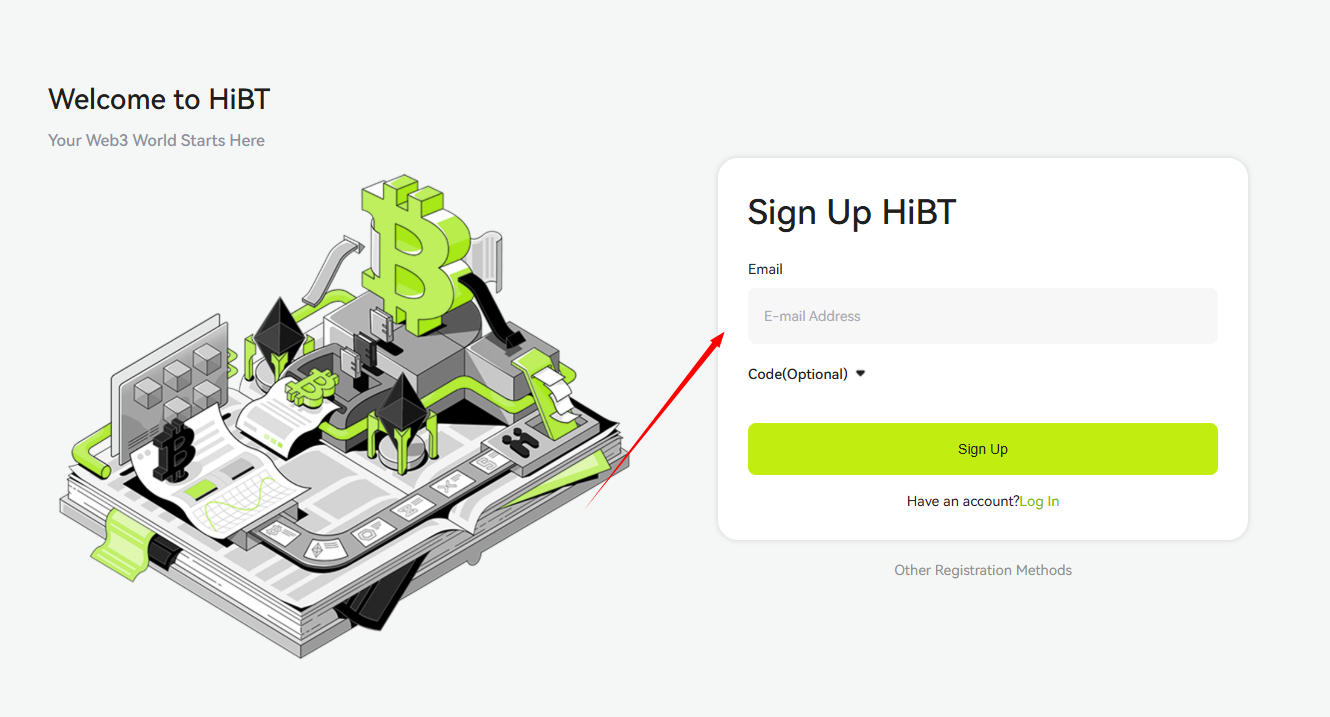
Once your USDT balance is credited, proceed directly to the trading desk:
- Navigate to the Spot Market: Select the spot trading module via the primary navigation panel or mobile dashboard.
- Locate the Asset: Enter "CRO" into the market search bar and choose the CRO/USDT trading pair. Double-check to ensure you haven't selected a similarly named ticker.
- Analyze the Trading Desk: Familiarize yourself with the interface displaying live spot price feeds, candlestick charts, the real-time order book, recent transaction logs, and the order configuration module.
- Select Your Order Type:
- Market Order: Executes instantly at the best available price in the live order book. It offers speed and simplicity for small allocations, though you may experience minor slippage in fast-moving markets.
- Limit Order: Allows you to set a precise maximum purchase price. The trade only triggers if the market reaches your designated level. It provides strict cost control, though your order may remain unfilled if the price moves away.
- Specify Your Allocation: Input the precise volume of USDT you wish to spend or the exact quantity of CRO you want to purchase. Before hitting the final trigger, verify the trading pair is CRO/USDT, the transaction direction is set to Buy, the order parameters are correct, and the transaction fees are acceptable.
- Confirm the Execution: Click the Buy button. You can monitor execution status via the Open Orders, Order History, or Core Asset Allocation tabs.
7. Market vs. Limit Orders: Which fits a beginner?
For modest, exploratory purchases (e.g., 20–100 USDT), a market order provides straightforward execution without needing to calculate order book depth.
If you are managing larger positions (e.g., 500 USDT or above), deploying limit orders or executing your purchase in tranches is a more disciplined approach. A stable entry framework involves splitting your capital into 3 to 5 separate entries, setting limit orders at key technical pullbacks, utilizing only a fraction of your designated position size per trade, and establishing clear exit parameters in advance.
8. Post-Purchase Custody: Exchange vs. Personal Wallet
Once your CRO order fills, you have two primary options for managing the asset:
Option A: Retaining Assets on HiBT
- Pros: Instant trade execution access; eliminates the overhead of personal private key management; ideal for smaller positions or short-term trading styles.
- Cons: Subject to platform custodial risk; account security vulnerabilities can compromise your access; you do not directly hold the cryptographic keys to the coins.
Option B: Withdrawing to a Self-Custodial Wallet
- Pros: Complete control over your private keys; direct integration with the Cronos dApp and DeFi ecosystem; reduces platform counterparty risk for long-term holding strategies.
- Cons: Irreversible asset loss if you lose your backup seed phrases; risk of selecting an incorrect destination network during withdrawal; on-chain network Gas fees apply; elevated exposure to malicious smart contract permissions.
For small, introductory positions, keeping assets on the platform is common practice. As your allocation grows and your investment horizon extends, taking the time to learn self-custodial wallet management is highly recommended.
9. Three common operational mistakes to avoid
- Network Selection Missteps: CRO can exist across multiple chain standards (ERC20, Cronos native, etc.). HiBT utilizes the ERC20 standard for its main corridor. Selecting an incompatible chain during withdrawal or deposit will result in a loss of funds. Always verify deposit networks, withdrawal destinations, receiving wallet support, and address strings.
- Ignoring Network Fee Disparities: Different public chains carry wildly different fee schedules. Because ERC20 operates on the Ethereum layer, gas overhead can be notably higher than alternative networks during times of high congestion. Check the minimum withdrawal requirements, flat network processing fees, and net token delivery balances before confirming transfers.
- Address Copy Errors and Clipboard Malware: Never manually type out long cryptographic hexadecimal addresses. Always utilize QR code scans or direct copy-paste functions. Verify the first 6 and last 6 characters of the address string explicitly before confirming. Maintain clean device security to protect against clipboard hijacker malware that replaces copied crypto addresses with malicious destinations.
VII. Conclusion: What CRO is and How to Approach It Today
To summarize CRO in a single sentence:
CRO is the core platform asset powering the Crypto.com and Cronos ecosystems—it is not BTC, nor is it ETH, but a high-risk asset tied directly to centralized exchange performance, on-chain Gas requirements, retail payment systems, and corporate staking strategies.
Summary of Opportunities & Risks
Opportunities:
- Crypto.com maintains a formidable, highly visible global brand presence.
- The token possesses explicit, functional utility across multiple verticals.
- Cronos features mature EVM compatibility for straightforward developer migration.
- The payment and card vertical provides a distinct consumer onboarding funnel.
- The price trades at a major percentage discount relative to historical highs.
- Corporate treasury allocations introduce an institutional capital narrative.
Risks:
- The asset's valuation remains heavily reliant on a centralized corporation.
- The Cronos chain faces severe layer-1 and layer-2 competition.
- Supply restructuring and reserve proposals have introduced long-term trust variables.
- Platform tier perks and cashback programs are subject to sudden corporate adjustments.
- The asset exhibits high historical price volatility.
- A low nominal price tag can easily be mistaken for fundamental undervaluation.
Tactical Recommendations Based on Your Profile
- If You Are Studying the Asset for Information: Keep the core structure in mind—CRO serves as Crypto.com’s corporate utility asset and Cronos’s native Gas token. Its price movements are tightly correlated to platform execution and broader crypto market waves. Monitor it from a distance before making any capital commitments.
- If You Are Looking to Open a Small Exploded Position: Ensure you deploy only discretionary capital that you can afford to lose. Keep the position size well within your high-risk allocation limits, execute entries in staggered tranches, avoid chasing green candles, stick strictly to spot pairs without leverage, and verify your trading channels and networks carefully on HiBT before executing.
- If You Are Planning a Long-Term Investment Strategy: Commit to consistent fundamental tracking. Regularly audit Crypto.com user acquisition metrics, shifts in token tier incentives, Cronos network TVL growth, active address trends, corporate treasury disclosures, macro market structures, and evolving regulatory frameworks.
Three Next Steps You Can Take Today
- Review live CRO data feeds to evaluate its market capitalization, current circulating supply, and long-term price structure rather than focusing purely on its nominal unit cost.
- Review official Crypto.com and Cronos documentation to map out exactly how staking rewards, gas mechanics, and payment features function.
- If you choose to purchase, set up a verified account on HiBT or a supported platform, fund a small test amount of USDT, and run through a complete end-to-end deposit, transaction, and withdrawal loop to master the operational mechanics.
A disciplined approach to investing does not rely on predicting an exact price peak; it focuses on knowing precisely why you entered a position before you buy, and knowing exactly how to manage your exit if the fundamental thesis changes.